Skip to content
LID & LEATHER

First to hit · Gloves

Heated Grips vs Heated Gloves

One heats your palms from the bike and never runs out. The other heats your whole hand and goes wherever you do. They solve overlapping halves of the same problem, and the right answer depends on how you ride, not which is better.

By Stephen V.Updated How we research
#ad

We earn a commission when you buy through our Amazon links, at no extra cost to you. It never affects our rankings, and we say so when the cheaper gear is the better buy. How this works.

Start with why this matters more than comfort. Cold hands lose dexterity before they lose feeling, and the two controls that suffer are the clutch and the front brake. A rider whose fingers have gone clumsy is a rider with a slower, coarser brake input, and that is a riding-safety problem rather than a nice-to-have. Whichever side of this comparison you land on, fixing cold hands is not an indulgence.

The physical difference is simple. Heated grips put a heating element inside the bar grip, so heat conducts into your palms— the side of your hand touching the bar. They run off the bike's electrical system, so they never go flat. Heated gloves run heating wire through the glove itself, usually reaching the back of the hand and out to the fingertips, so they heat the whole hand including the parts the wind is actually hitting. They run from either a battery pack in the cuff or a lead wired to the bike.

The consequences follow directly. Grips warm the part of your hand that was already insulated by contact and does not face the wind. Gloves warm the part that is exposed. That is why riders who commute through real winters so often end up with both, and why the honest recommendation depends less on which is "better" and more on how cold your coldest ride is.

Below we have put our top grip pick and our top glove pick side by side, along with the value option on each side. If you already know which category you want, the deeper rankings are best heated grips and best heated gloves.

The short answer

Quick picks

#ProductBest forScorePrice
01
Koso Koso Apollo Heated Grips
Koso Apollo Heated Grips

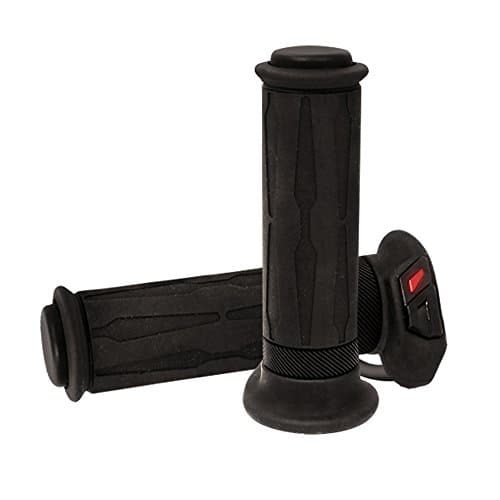
The grip set to buy if you are only buying one. Koso publishes five temperature levels on an integrated thumb switch with a multi-color indicator, and heat-level memory so the grips come back on where you left them — and this listing covers both 7/8 in and 1 in bars.

Best overall heated grip
8.7
$117.41Amazon
02
Gerbing Gerbing 12V Vanguard
Gerbing 12V Vanguard

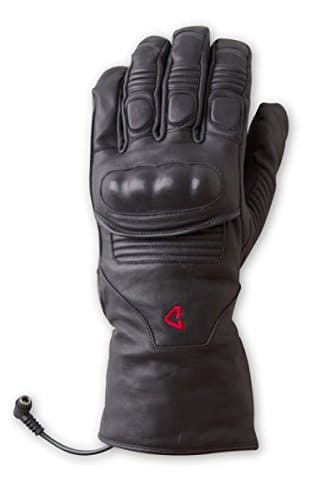
Hardwired to the bike at 12V, so the heat never runs out: 135F at 13W through microwire that reaches the tip of every finger, in an aniline cowhide gauntlet with floating TPU knuckles.

Best heated gloves overall
8.6
$179.99Amazon
03
BikeMaster BikeMaster Heated Grips
BikeMaster Heated Grips

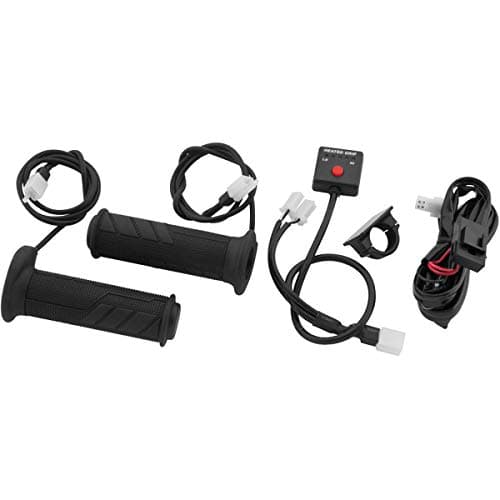
The value entry into hardwired heat. A straightforward 7/8 in, 120 mm heated grip set that does the one job — warm bars, all day, no batteries — for meaningfully less than the premium kits.

Best value hardwired set
8.2
$72.30Amazon
04
Highway 21 Highway 21 Radiant
Highway 21 Radiant

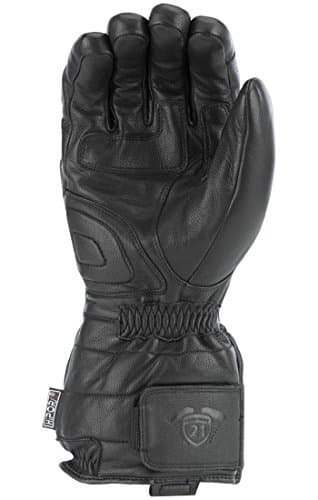
The best-built battery glove here: real leather with a Hipora waterproof and windproof liner, 100 g of Thinsulate, armored knuckles and three heat settings from a 7V lithium-ion pack.

Best cordless heated glove
8.4
$119.95Amazon

#ad · Live prices from the Amazon Product API, as of Sep 7, 2026. Where we have no verified live price we show none — we would rather leave a gap than print a number that has rotted.

In detail

The picks, in full

01
Koso Koso Apollo Heated Grips

Best overall heated grip

Koso Apollo Heated Grips

Fits 7/8 in + 1 in bars5 temperature levelsIntegrated thumb switchHeat-level memory
8.7/10

The grip set to buy if you are only buying one. Koso publishes five temperature levels on an integrated thumb switch with a multi-color indicator, and heat-level memory so the grips come back on where you left them — and this listing covers both 7/8 in and 1 in bars.

Heat output
9.2
Control
9.6
Fitment
9.4
Install effort
7
Value
8.4

Pros

  • Five published heat levels with a color-coded indicator, changed without taking a hand off the bar
  • Heat-level memory means you are not re-selecting your setting at every light
  • One listing covers both common bar diameters, so it fits cruisers and standards alike

Cons

  • Hardwired — this is a proper installation with a switched power source, not a plug-in
  • Grip rubber is what it is; you are replacing your existing grips, not adding to them

Don't buy this if…

you are not willing to wire into the bike's electrical system or pay a shop to — a battery-powered bar heater or heated gloves are the no-wiring answer.

$117.41View on Amazon

Price as of Sep 7, 2026. Prices change — Amazon's is the one that counts.

#ad · we may earn a commission from this link to Koso Apollo Heated Grips

02
Gerbing Gerbing 12V Vanguard

Best heated gloves overall

Gerbing 12V Vanguard

12V DC hardwired · 1.1 A135F max at 13W150 g ThinsulateFloating TPU knuckles
8.6/10

Hardwired to the bike at 12V, so the heat never runs out: 135F at 13W through microwire that reaches the tip of every finger, in an aniline cowhide gauntlet with floating TPU knuckles.

Heat output
9.6
Run time
9.8
Protection
8
Weatherproofing
8.6
Convenience
7

Pros

  • Bike-powered, so there is no battery to run flat two hours into a cold ride
  • Microwire heating runs to the fingertips, which is where cold actually starts
  • Leather gauntlet with floating TPU knuckles and gel palm pads — the most protective build here

Cons

  • No published EN 13594 certification
  • Wiring the bike is a real installation, not a plug-and-play
  • Tethered — you cannot walk away from the bike still wearing them heated

Don't buy this if…

you will not wire a controller to the battery — a 7V battery glove is the cordless compromise.

$179.99View on Amazon

Price as of Sep 7, 2026. Prices change — Amazon's is the one that counts.

#ad · we may earn a commission from this link to Gerbing 12V Vanguard

03
BikeMaster BikeMaster Heated Grips

Best value hardwired set

BikeMaster Heated Grips

7/8 in bars120 mm lengthHardwired 12VSimple controller
8.2/10

The value entry into hardwired heat. A straightforward 7/8 in, 120 mm heated grip set that does the one job — warm bars, all day, no batteries — for meaningfully less than the premium kits.

Heat output
8.4
Control
7.6
Fitment
8.2
Install effort
7.2
Value
9.4

Pros

  • The cheapest genuinely hardwired option here, so the heat never runs out mid-ride
  • Standard 7/8 in / 120 mm sizing fits the majority of street bikes without adapters
  • Fewer features means fewer things to fail on a bike that lives outdoors

Cons

  • Fewer heat levels and less refined control than the Koso or Oxford kits
  • 120 mm only — check your bar length and switchgear clearance before ordering

Don't buy this if…

you have 1 in cruiser bars — this listing is the 7/8 in size, and grip diameter is not something you can fudge.

$72.30View on Amazon

$79.9510% off

Price as of Sep 7, 2026. Prices change — Amazon's is the one that counts.

#ad · we may earn a commission from this link to BikeMaster Heated Grips

04
Highway 21 Highway 21 Radiant

Best cordless heated glove

Highway 21 Radiant

7V lithium-ion battery3 heat settings100 g ThinsulateHipora waterproof liner
8.4/10

The best-built battery glove here: real leather with a Hipora waterproof and windproof liner, 100 g of Thinsulate, armored knuckles and three heat settings from a 7V lithium-ion pack.

Protection
8.4
Weatherproofing
9
Heat output
8.6
Convenience
9
Run time
7

Pros

  • Leather gauntlet with armored knuckles — a riding glove that happens to be heated
  • Hipora liner is waterproof and windproof, which most heated gloves are not
  • No wiring, so it works on any bike and off the bike too

Cons

  • No published EN 13594 certification
  • Battery life falls off fast on the high setting
  • Bulkier than an unheated leather glove, so lever feel suffers

Don't buy this if…

your cold rides are long — a battery that fades on high is exactly the wrong failure at hour three.

$119.95View on Amazon

$179.9933% off

Price as of Sep 7, 2026. Prices change — Amazon's is the one that counts.

#ad · we may earn a commission from this link to Highway 21 Radiant

What each one actually heats

A heated grip is a conduction heater. Your palm is pressed against a warm cylinder, so heat moves into the palm and the inside of your fingers efficiently. It does almost nothing for the back of your hand, and very little for the last joint of your fingers where they wrap the far side of the grip. Fingertips are exactly where cold-weather numbness starts, which is the honest limitation of grips.

A heated glove is a distributed heater. The better ones run microwire out to each fingertip — our top glove pick, the Gerbing 12V Vanguard, is on this page for that reason — so the heat reaches the tissue that is cooling fastest. The trade is that the glove has to carry insulation, a heating circuit and a power source, which makes it bulkier and reduces lever feel compared with a thin unheated glove.

There is a second-order effect worth knowing. Thick gloves and heated grips work against each other: the insulation that keeps wind off your hand also keeps grip heat from reaching your palm. Riders who fit grips often find they can drop to a thinner glove and end up both warmer and with better lever feel. That is a genuine ergonomic win and it is one of the strongest arguments for grips.

Power: the difference that decides long rides

Grips run off the bike. As long as the engine is running and your charging system has the surplus, they run forever. There is no battery to manage, nothing to remember to charge, and no fade at hour three.

Heated gloves split into two families and the distinction matters more than any other spec. Battery gloves — like the Highway 21 Radiant on this page, running a 7V lithium pack — are cordless, work off the bike, and fade. Manufacturers publish run times for the highest setting that are shorter than a long winter day, and cold weather itself reduces lithium battery output, which is a cruel irony on exactly the days you need them most. Hardwired 12V gloves — like the Gerbing Vanguard, which publishes 135°F at 13 W drawing 1.1 A — never run out, but tether you to the bike with a coiled lead you must unplug before you dismount.

If your cold rides are two hours or less, battery gloves are the convenient answer. If they are all-day, either hardwire the gloves or fit grips.

Cost, honestly

Grips are usually the cheaper total solution, and they are a one-time cost. There is no consumable, nothing to replace when a battery pack degrades, and they stay with the bike. The hidden cost is installation: if you are not doing it yourself, add shop labour, and if your bike has minimal charging surplus you may need to think harder about the circuit.

Heated gloves are a wearing item. Batteries degrade, heating wire can fail at flex points, and the glove itself wears out like any glove. On the other hand they move between bikes, they work when you are off the bike, and they need no installation at all — which for a rider who leases, borrows or frequently changes machines is decisive.

For a rider on a budget who wants the biggest improvement per dollar, our answer is usually: cheap hardwired grips plus handguards or bar muffs, worn under a normal mid-weight winter glove. That combination beats an expensive heated glove alone on most bikes, because it deals with wind — which is the actual mechanism making you cold — as well as adding heat.

The protection point neither marketing page makes

Heated grips do nothing to protect your hands in a crash, and heated gloves frequently protect them less than a good unheated glove does. The heating circuit and its insulation take up space that armor and impact padding would otherwise occupy, and neither of the heated gloves in our ranking publishes an EN 13594 certification — a fact we state on every heated glove card on this site.

That is not a reason to ride with cold hands; numb fingers on a brake lever are their own hazard. It is a reason to know what you are trading. If you want maximum hand protection in winter, the strongest combination is a certified winter glove from our winter glove ranking over heated grips, rather than an unarmoured heated glove alone. Our glove buying guide explains what Level 1 and Level 2 actually certify.

Which should you buy?

Buy grips if you ride one bike, you ride it often in the cold, and you are willing to wire an accessory circuit or pay someone to. They are cheaper over time, they never fade, and they let you wear a thinner, better-protecting glove. This is the right answer for most commuters.

Buy heated gloves if you ride multiple bikes, if your bike has a marginal charging system, if you want warmth off the bike too, or if your problem is specifically numb fingertips — which grips do not solve. Choose hardwired 12V if your rides are long and battery-powered if convenience matters more than run time.

Buy bothif you genuinely ride through a cold winter. It is not extravagant; it is the combination that lets you run each at a lower setting, which is more comfortable than either at maximum and easier on your bike's electrical system. And before any of it, read when it is too cold to ride — because there is a temperature below which no amount of heat makes the road safe.
How we picked

We don't test helmets. Here's what we do instead.

Everyone in this category says they tested twenty helmets. We haven't tested any — and we say so. What we do instead: compile the published DOT, ECE 22.06 and Snell certifications, the manufacturer's fit, weight and shell specs, the CE armor levels, and reputable published reviews, then score each pick against a published rubric. The scores are judgments from documented research — not measurements we took, because we do not run a lab and we are not going to pretend we do. Every certification and spec claim traces to a source we name and link.

Questions

Frequently asked

Are heated grips or heated gloves warmer?
Heated gloves warm more of your hand — including the back of the hand and the fingertips, which is where cold starts. Heated grips only warm your palms. Grips never run out of power, though, and they let you wear a thinner glove with better lever feel. For pure warmth on the coldest days, gloves; for reliability and value, grips.
Can you use heated grips and heated gloves together?
Yes, and many cold-climate riders do. The advantage is that you can run both at a lower setting rather than either at maximum, which is more comfortable and easier on your bike's charging system. Check total current draw if you are hardwiring both.
Do heated grips work through thick winter gloves?
Much less well. The insulation that keeps wind out also blocks grip heat from reaching your palm. Riders who fit grips often move to a thinner glove and end up warmer overall, with better feel at the levers. That is one of the strongest practical arguments for grips over gloves.
How long do heated glove batteries last?
Less than a full winter day on the highest setting, and less again in genuinely cold weather because low temperatures reduce lithium battery output. If your cold rides run all day, either choose a hardwired 12V glove — the Gerbing Vanguard publishes 135°F at 13 W on a 1.1 A draw — or fit grips instead.
Do heated gloves protect your hands in a crash?
Less than a comparable unheated riding glove, generally. The heating circuit occupies space that impact protection would otherwise use, and neither heated glove in our ranking publishes an EN 13594 certification. If protection is the priority, a certified winter glove over heated grips is the stronger combination.
What is the cheapest way to fix cold hands on a motorcycle?
Handguards or bar muffs plus a basic hardwired grip set, worn under a normal mid-weight glove. Blocking wind is mechanically more effective per dollar than adding heat, and the combination usually beats an expensive heated glove used alone.

Keep reading

Receipts

Sources

We do not run a testing lab, and we do not pretend to. Our picks are built from published certifications, manufacturer spec sheets, the standards documents themselves, and reputable published reviews — named and linked above. Where we could not verify something, we say so on the page rather than quietly leaving it out. Read our full method.