A helmet that hurts in one specific spot almost never has a size problem. It has a shape problem, and the location of the pain tells you which one. Pressure across the forehead means the shell is rounder than your head is long. Pressure on the temples, at the sides above your ears, means the opposite — the shell is longer front-to-back than your head. Pressure on the crown, on the top of your skull, usually means the helmet is genuinely too small. The first two are fixed by changing model; only the third is fixed by changing size.
This matters more than comfort, which is the reason this page exists. A helmet is a crushable liner that has to be in contact with your head all the way round to work. Hot spots mean the contact is uneven: some of the EPS is loaded and some is not touching you at all. Riders deal with a hot spot by going up a size, which trades a painful helmet for a loose one — and a loose helmet rotates, lifts and in the worst case comes off. So the right response to a pressure point is to work out what it is telling you first. Our how a helmet should fit guide covers the baseline checks; this page is the diagnostic when the baseline is not met.
One thing to get out of the way: a new helmet is supposed to feel snug. Firm, even pressure all round, with your cheeks pushed up slightly so you look faintly ridiculous, is correct and will relax. A single point of pressure that you can put a finger on is not the same sensation and does not relax in the same way. If you are not sure which you have, the thirty-minute test at the bottom of this page settles it.
What to check, in order
- Measure your head properly first. A tape around the widest part of the skull, roughly 1 cm above the eyebrows and around the largest point at the back. Compare it to the maker's own chart, in centimetres, not to a generic S/M/L. Our measuring guide and size chart cover it, and no diagnosis below is reliable until this is done.
- Identify your head shape. Round, intermediate oval or long oval, judged from above. This is the variable that causes pressure points, and most riders have never been told it exists — our head shapes guide has the overhead-photo method.
- Locate the pressure precisely, with the helmet on for ten minutes. Not on first contact. Put it on, sit still, and after ten minutes point at exactly where it hurts. First-second pressure is usually just the cheek pads and the ear openings.
- Check whether the pad or the shell is doing it. Cheek pads and crown pads are replaceable on most mid-range and premium helmets and come in different thicknesses. Shell shape is not replaceable. If the pressure is coming from a pad, it is a cheap fix.
- Check the strap and the eye port while you are there. A chin strap tightened unevenly tilts the helmet and creates pressure that has nothing to do with shape, and a brow line sitting too low feels like forehead pressure when it is actually the helmet being worn too far forward. Our how to wear a helmet guide covers the position.
We do not fit helmets for a living and we have not tried these on your head. What follows is the geometry of head shape against shell shape, plus the published shell-shape and shell-count information makers give for the models named — which is the only honest basis for recommending one over another on fit.
The diagnostic table
| Where it hurts | What it usually means | Does it break in? | The fix |
|---|
| Forehead, a band across the brow | Shell is rounder than your head — you are longer front-to-back | No | An intermediate-oval or long-oval shell |
| Temples, both sides above the ears | Shell is longer front-to-back than your head — you are rounder | No | A rounder shell, or a round-friendly model |
| Crown, top of the skull | Helmet is too small, or the crown pad is too thick | Partly | Next size up, or a thinner crown pad |
| One side only | Uneven cheek pads, or the helmet is sitting crooked | No | Swap one cheek pad; re-check strap tension |
| Cheeks, jaw aching | Correct on a new helmet — cheek pads compress first | Yes | Wait 15–20 hours of wear, or thinner cheek pads |
| Back of the head, low down | Helmet worn too far forward, or a rear shell shape mismatch | No | Re-seat the helmet; re-check brow line |
Forehead pressure: the most common complaint there is
A band of pressure across the brow, often with a red mark after twenty minutes, is the signature of a round shell on a longer head. The shell runs out of length front-to-back, so it loads your forehead and the back of your skull while leaving gaps at the temples — you can often slide a finger in at the sides when the forehead is already sore. No amount of wearing fixes this, because the EPS does not get longer.
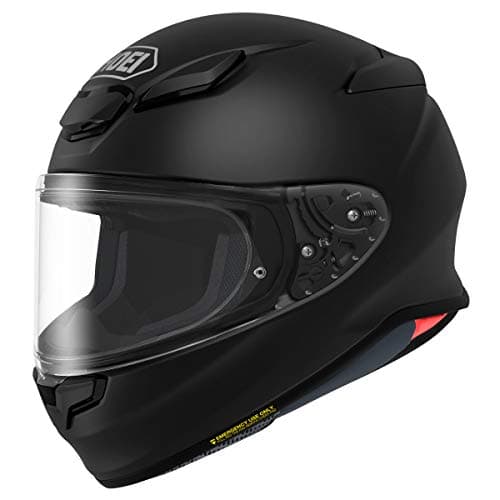
The fix is a shell shaped like your head. The Shoei RF-1400 is an intermediate-oval helmet across five shell sizes, which is why it suits so much of the market and why we say plainly on its card that it does not suit round heads. For heads longer still, our intermediate-oval ranking is the place to start. One caution: if the mark is right at the brow line rather than up the forehead, check you are not simply wearing the helmet too far forward before you spend anything.
Temple pressure: the mirror-image problem
Pressure at the sides, above and in front of the ears, with the forehead comfortable, is a long shell on a round head. The shell squeezes across the width because it has length to spare. It is the problem riders most often misdiagnose as "too small," and going up a size gives you a loose helmet that still presses at the temples.
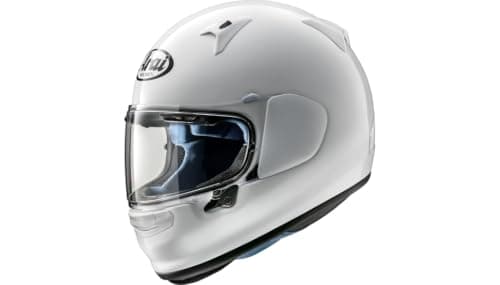
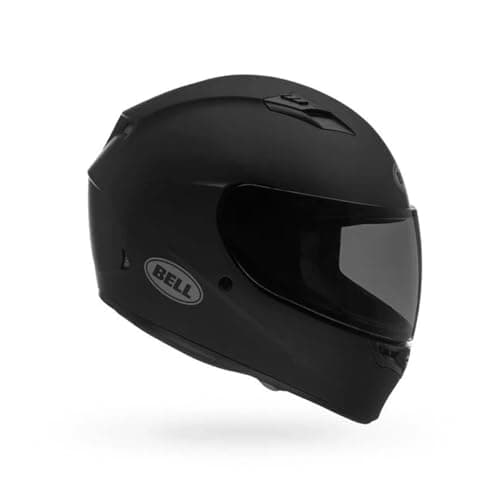
Arai builds the Regent-Xaround its R75 round-smooth shell profile with a 5 mm base flare that lets a snug fit go on over the ears — a round-and-round-oval answer from a premium maker. At the other end of the market the Bell Qualifier is a round-head-friendly budget full-face, and the fact that a rounder shell is available for well under a hundred dollars is the reason nobody should be riding in a helmet that presses on their temples. Our head shapes guide lists which models suit which shape, and our first helmet by head shape and budget page cross-references the two.
Crown pressure: the one that really is about size
Pressure on the top of the skull, sometimes with a headache after half an hour, is the classic too-small helmet — or a crown pad thicker than you need. Check the simple thing first: most mid-range and premium helmets sell crown and cheek pads in several thicknesses, and a thinner crown pad is a fraction of the price of a new helmet. If the pad is already the thinnest available and the measurement says you are at the top of your size band, go up a size and compensate with thicker cheek padsso the fit stays snug at the jaw. That combination — bigger shell, thicker cheeks — is the standard shop answer and it works.
What breaks in and what does not
Cheek pads compress, by a noticeable amount, over the first fifteen to twenty hours of wear. The crown pad compresses a little. The EPS liner and the shell do not change at all, ever — they are structural, and the whole point of them is that they hold their shape until they are crushed in an impact. So any pressure coming from shell geometry is permanent. Our helmet break-in guide covers the legitimate break-in process and how long to give it before judging.
Two things people try that are worth naming as bad ideas. Do not remove the crown pad to make room — it is part of the fit system and the gap it leaves lets the helmet move. And do not heat, dampen or compress the EPS to "mould" it; it is energy-absorbing foam whose performance depends on its structure, and damaging it is not visible from the outside.
The thirty-minute test before you keep a helmet
Put the helmet on indoors with the strap fastened properly and leave it on for thirty minutes while you do something else. Then take it off and look in a mirror. Even redness all round is correct. A single red mark you can point at, a headache, or numbness is a fail, and a fail at thirty minutes in an armchair is a much worse fail at hour three on a motorway. Keep the box and the receipt until the helmet passes this test — and run it before you fit an intercom, because most retailers will not take back a helmet with adhesive pads in it. Our helmet fit guide has the rotation and roll-off checks to run at the same time, and helmets for glasses covers the extra pressure point spectacle arms create.