The women's motorcycle jacket market has a long, unimpressive history of what the industry calls "shrink it and pink it" — a men's pattern scaled down, recolored, and sold at the same price with less armor in it. That has changed, but not evenly, and the difference between a genuinely women's-specific jacket and a resized one shows up in exactly the places that decide whether the jacket protects you.
The tell is armor placement. A jacket cut for a shorter torso and a different shoulder-to-waist ratio puts the shoulder armor on the point of the shoulder and the elbow armor on the elbow. A resized men's jacket puts the shoulder cup somewhere on the upper arm and the elbow pad halfway down the forearm, where it protects nothing at all. Armor that is not where the impact is might as well not be in the jacket — and no certification number catches that, because certification tests the armor, not where the garment holds it.
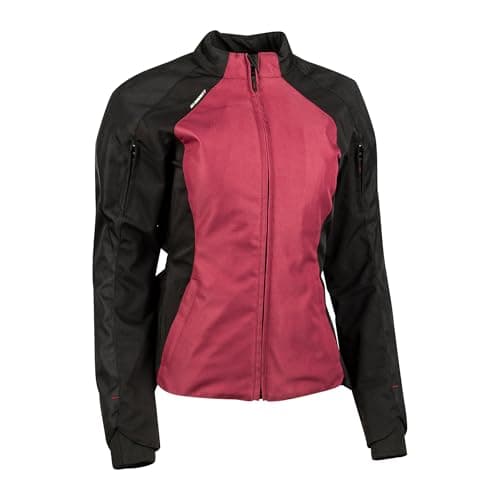
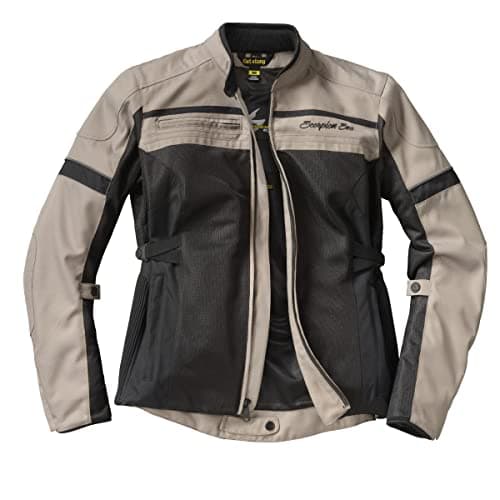
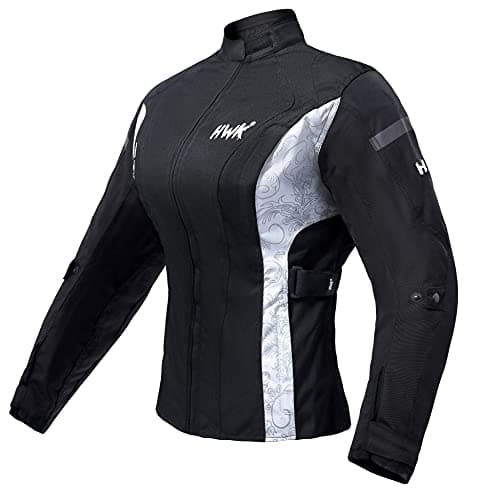
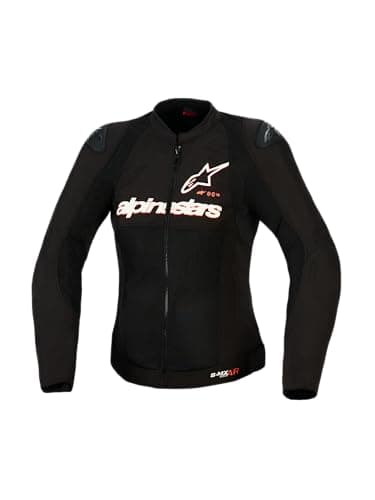
So we ranked these on what the makers publish and on how the chassis is cut. The Alpinestars Stella SMX Air is the only jacket here with a published EN 17092 garment classon a women's-specific chassis, and it is built to expand around a Tech-Air airbag. The Joe Rocket Aurora 2.0 includes a CE Level 2 back protector most jackets leave out. The ScorpionEXO Cargo Air is the summer mesh pick. And the HWK Adventure is the honest budget entry, with the honest caveats that come with it.
A jacket is the first piece of a kit, not the whole one. Our motorcycle gear for women guide puts the helmet, boots and gloves alongside it, and explains what a women's pattern actually changes — and the two pieces where buying unisex is often smarter.
Two different certifications, and most jackets only publish one
This trips up more buyers than anything else in the category. There are two separate CE certifications on a riding jacket and they measure different things:
- EN 1621-1 certifies the armor— the shoulder, elbow and back inserts — at Level 1 or the tougher Level 2. Almost every jacket on the market publishes this, because the armor supplier certifies it.
- EN 17092 certifies the garment— the shell's abrasion, tear and seam-burst performance — in classes AAA, AA, A, B and C. Far fewer jackets publish it, because it means submitting the whole finished garment.
"CE armor included" therefore tells you nothing about how long the fabric lasts on the road. A jacket with Level 2 armor in an uncertified shell has excellent impact protection and unknown abrasion resistance. Only the Alpinestars publishes both here. Our CE armor levels guide maps the whole family of standards, and it is the page to read before you spend money on any jacket.
Fit is a safety spec, not a vanity one
Check four things when the jacket arrives. Shoulder armor on the shoulder point — reach for imaginary bars and see if the cup stays put or slides down your arm. Elbow armor on the elbow with your arms bent, not straight, because you ride bent. Sleeve length with your arms forward, since sleeves that reach your wrist standing up will expose it on the bike. And a back protector pocket that sits over your spine rather than riding up between your shoulder blades.
Then check that it is snug without being restrictive. Armor migrates in a crash if the garment is loose, and a jacket that flaps at speed is a jacket whose armor is not where you left it. Our how to choose a jacket guide covers the full fit sequence. The same logic applies at your hands, where a glove that is too big lets the knuckle protector drift off your knuckles; our women's motorcycle gloves ranking covers how women's glove sizes differ from men's, and our women's motorcycle boots ranking covers the boot version of the same problem: a heel that lifts inside the boot is ankle armor that has moved.
The back protector question
Most jackets ship with an uncertified foam pad in the back pocket and call it a back protector. It is not; it is a comfort pad that stops the pocket looking empty. The Joe Rocket Aurora 2.0 is a genuine exception here — a CE Level 2 back insert included in the box, at a price where that is unusual. The ScorpionEXO has the pocket cut for a Sas-Tec Level 2 insert but does not include one, which is at least honest.
If your jacket has a foam pad, replacing it is the cheapest meaningful safety upgrade available to you. See best back protectors for slot-in inserts and standalone harnesses, and do you need a back protector for where it sits in the buying order.
Airbag compatibility is now a real buying criterion
Airbag vests have moved from race paddock to street in the last few years, and the jacket you buy today decides whether you can add one later. The Stella SMX Air is explicitly built around the Tech-Air 5: the stretch panels are there to give the vest somewhere to go when it inflates. A jacket cut tight with no expansion will fight an inflating vest, and a jacket cut loose enough to fit one over the top flaps at speed.
If an airbag is anywhere in your plans, buy the jacket that says so on the label. Our airbag vest ranking covers the tethered versus electronic decision, and airbag vest vs back protector is the comparison most riders actually need first.
Season and climate: one jacket rarely does everything
A mesh jacket like the Stella SMX Air or the Cargo Air moves serious air and is a genuinely different experience on a 95F day — and is useless at 45F without layers. A textile all-rounder like the Aurora 2.0 or the HWK covers a wider band with liners but never flows like mesh. There is no jacket that is best at both, and pretending otherwise is how people end up with an expensive jacket they only wear two months a year.
Buy for the riding you actually do most. If summer is the problem, our summer jacket ranking goes deeper on airflow, and mesh vs textile settles the trade-off properly.
Which one should you buy?
Buy the Alpinestars Stella SMX Airif you want the only published garment class here on a women's-specific chassis that is airbag-ready — it is the most complete answer on this page. Buy the Joe Rocket Aurora 2.0 if you want the most armor for your money, including a CE Level 2 back protector that is actually in the box. Buy the ScorpionEXO Cargo Air if summer heat is the thing stopping you riding, and budget separately for the Level 2 back insert its pocket is cut for. And buy the HWK Adventureif the alternative is riding in a hoodie — an armored, lined jacket at that price is a real step up, as long as you go in knowing it publishes the least of anything here.