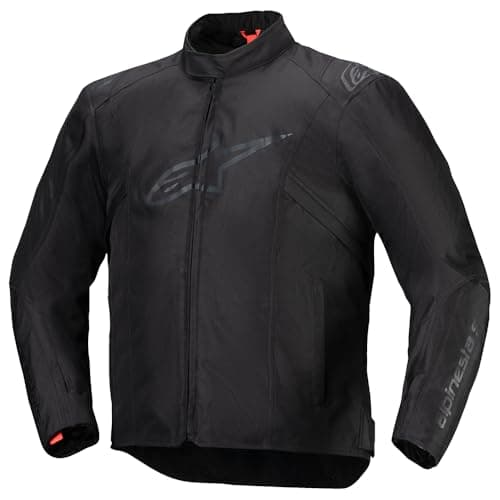
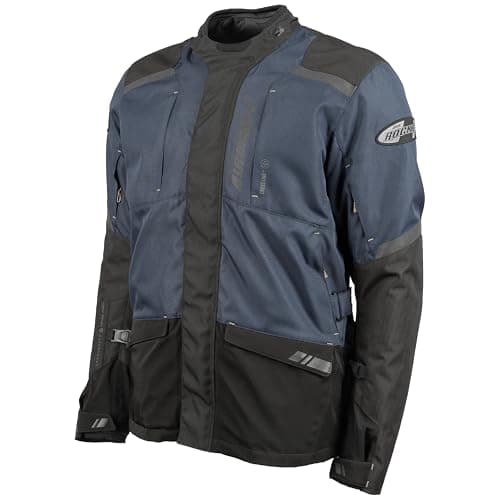
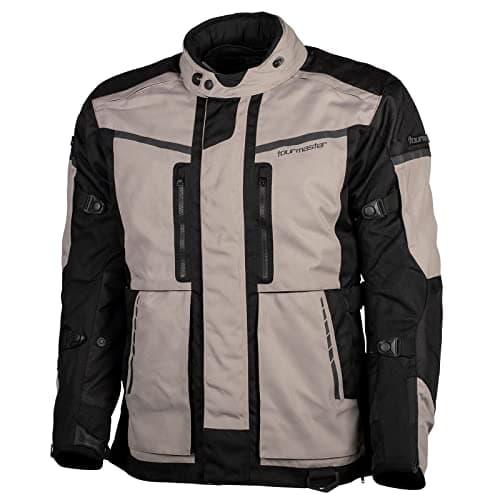
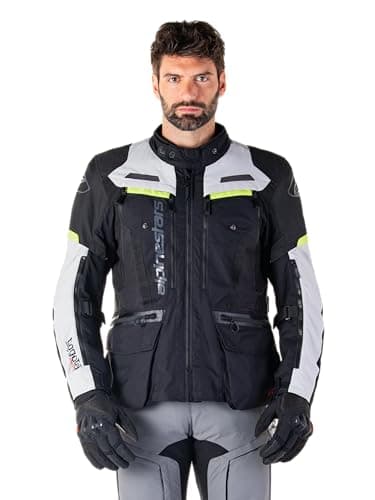
Here is the distinction that decides whether you arrive dry, and almost nobody explains it at the point of sale. A drop-linerjacket has a waterproof membrane zipped in behind the outer shell. Rain soaks the shell, the membrane stops it reaching you, and you stay dry — while wearing a jacket that is now holding several pounds of water, cold against your arms, and will take a day to dry. A laminated jacket bonds the membrane to the outer fabric, so the shell itself never wets out.
Both are honestly described as waterproof. In a twenty-minute shower you will not notice the difference. In hour three of steady rain, the drop-liner rider is cold and heavy and the laminate rider is not. That is the whole reason a laminate costs more, and it is why we ranked this category on membrane construction first.
The Alpinestars Bogota Pro Drystartakes the top spot for pairing a Drystar membrane with the strongest published certification pair here — EN 17092 AA class and CE Level 2 shoulder and elbow armor. The T-SPS V2 Waterproof brings a fully seam-taped membrane and a published A class at a much friendlier price. The Joe Rocket Ballistic 16.0 has the best armor package on the page, including a CE Level 2 spine protector in the box. And the Tourmaster Transition gets CE Level 2 shoulder and elbow armor into an entry-level jacket, with the drop-liner compromise that price implies.
A waterproof jacket is one piece of a wet-weather kit, and it is not the piece that most often ruins the ride — water gets in at the neck, the cuffs and the boot tops, and a fogged visor is what actually stops you seeing. Our motorcycle gear for rain guide covers the whole head-to-toe system.
Laminate vs drop liner: the mechanism that decides everything
A membrane works by having pores small enough to block liquid water and large enough to pass water vapor. Where the manufacturer puts that membrane is the design decision.
Drop liner (or zip-in liner): the membrane is a separate layer inside the jacket. It is cheap, it is removable, and it lets one jacket work as a vented summer shell and a waterproof winter one. The costs are real though: the outer shell absorbs water and gets heavy and cold, the membrane cannot breathe efficiently through a sodden shell, and water tracks along the inside of the sleeves to your gloves. The Tourmaster Transition and most jackets under about $200 work this way.
Laminate: the membrane is bonded directly to the outer fabric. The shell never wets out, the jacket stays light, and breathability holds up in sustained rain. Alpinestars' Drystar construction on the Bogota Pro is the example here. It costs more and you cannot remove the waterproofing for hot weather — which is exactly why laminates come with big vents instead.
Seam taping is not optional
A membrane is useless if water walks in through the stitching, and every seam in a jacket is thousands of needle holes. Fully seam-tapedmeans every seam is sealed; "critically seam-taped" means only the shoulders and upper chest are, which is a real compromise dressed in reassuring language. Alpinestars publishes the T-SPS V2 as fully seam-taped. If a listing does not say, assume it is not.
The other leak paths are the ones nobody photographs: the collar, the cuffs and the front zip. A storm flap over the main zipper, an adjustable neck that actually closes, and cuffs that seal over or under your gloves are the difference between a dry ride and a wet forearm. The Tourmaster's Aqua-Barrier hood exists specifically to stop water running off your helmet and down your neck, which is the single most common failure point.
Waterproof does not mean certified
This is the trap in the category. A jacket can be genuinely, brilliantly waterproof and still publish nothing at all about its abrasion resistance. Only the two Alpinestars jackets here publish an EN 17092garment class — AA for the Bogota Pro, A for the T-SPS V2. The Joe Rocket and the Tourmaster publish CE levels for their armor under EN 1621-1, which is a different and narrower claim.
Read both. Armor certification tells you the inserts absorb impact; garment certification tells you the fabric survives the slide. Our CE armor levels guide takes the standards apart properly, and best armored jackets ranks purely on the protection side.
Breathability is the spec that ruins good waterproof jackets
Riding in a jacket that keeps rain out and sweat in is its own kind of wet. Everything that helps here is mechanical rather than magic: direct ventswith waterproof zips, exhaust vents on the back to actually pull air through, and a membrane that is not blocked by a saturated outer shell — which brings us back to laminates.
If you commute in the rain and then walk into an office, this matters more than the waterproof rating. If you tour, it matters most on the warm, drizzly days that make up more riding weather than proper storms do.
Thermal liners are a separate system
Do not conflate waterproof with warm. The Bogota Pro's three-layer liner-to-drop system, the T-SPS V2's removable thermal liner, the Ballistic 16.0's full-sleeve insulated liner and the Transition's thermal vest all address cold, not water. A jacket with both a membrane and a thermal liner covers a genuinely wide band of weather, which is why these tend to be marketed as three- or four-season shells.
For the cold end of that band, our cold weather gear guide covers how the layers work together, and best touring jackets looks at the same problem from the long-distance side.
Which one should you buy?
Buy the Alpinestars Bogota Pro Drystarif you ride a lot of weather and want the strongest published numbers here — AA garment class, Level 2 armor, laminate membrane, airbag-ready. Buy the T-SPS V2 Waterproof if you want a genuine fully seam-taped membrane and a published garment class without the flagship price. Buy the Joe Rocket Ballistic 16.0 if armor is your priority and you want a CE Level 2 spine protector included rather than sold separately. And buy the Tourmaster Transitionif the budget is tight — CE Level 2 shoulder and elbow armor at that price is genuinely good value, provided you replace the foam back pad and accept the drop-liner trade. Riding wet also means waterproof boots; wet feet ruin a ride faster than a wet jacket does. Keeping either working is mostly maintenance — our guide to waterproofing motorcycle gear covers reproofing jackets, boots and gloves and what cannot be saved.