Skip to content
LID & LEATHER

New riders · Start Here

Motorcycle Gear for Rain

A soaked rider is rarely wearing the wrong jacket. They are wearing a good jacket with water running in at the neck, the cuffs and the boot tops - and a visor they cannot see through.

By Stephen V.Updated How we research
#ad

We earn a commission when you buy through our Amazon links, at no extra cost to you. It never affects our rankings, and we say so when the cheaper gear is the better buy. How this works.

If you buy one thing for riding in the rain, buy a laminated waterproof jacket, and the Alpinestars Bogota Pro Drystaris the one we rank first: an EN 17092 AA class garment with Nucleon Flex Pro CE Level 2 armor and a Drystar membrane, which means it is a protective jacket that happens to be waterproof rather than a rain shell with a logo. But the honest answer to "what gear do I need for rain" is that the jacket is the easy part. Water does not come through good fabric. It comes in at the gaps— the neck, the cuffs, the waist, the boot tops — and the thing that actually ends wet rides is not a damp back. It is a fogged visor and hands too cold to work the levers.

So this page is a four-piece system, not a jacket recommendation. The Pinlock insert for your visor is the cheapest item here and the one that changes the ride most. Waterproof gloves keep your hands working. Certified waterproof boots keep the one gap you cannot close with a strap from filling up.

What to look for in wet-weather gear

  1. Laminate or drop-liner? A laminate bonds the membrane to the outer fabric, so the shell never soaks up water and stays light all day. A drop-liner puts the membrane in a separate zip-in layer, which is more versatile and gets heavy when the outer fabric wets out. Our waterproof jackets ranking compares the two in depth.
  2. Is it protective first, or waterproof first? A rain suit over a mesh jacket keeps you dry and adds nothing in a crash. A jacket that publishes an EN 17092 class and a membrane does both jobs. Rain riding is when grip is worst, so this is the wrong day to downgrade protection.
  3. Does the maker publish a seal, or just a name? Seam taping, storm flaps and a cuff that closes over the glove are what keep water out. Membrane brand names are the headline; the construction is the product.
  4. Can you still see? Nothing on this list matters if the visor is fogged. Cold outside, warm breath inside and a closed shield is a cloud, every time.

We have not ridden these items through a storm and we do not run a lab. Every specification below is quoted from the maker's published spec sheet and sourced on the pages these picks come from.

The short answer

Quick picks

#ProductBest forScorePrice
01
Alpinestars Alpinestars Bogota Pro Drystar
Alpinestars Bogota Pro Drystar

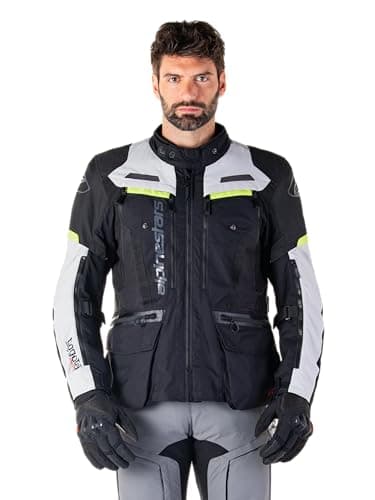
CE Category II certified to EN 17092 AA class with CE Level 2 shoulder and elbow armor and a Drystar membrane — a genuine four-season touring shell that publishes every number that matters.

Best waterproof jacket overall
9.0
$485.00Amazon
02
Pinlock Pinlock 70 Max Vision Insert
Pinlock 70 Max Vision Insert

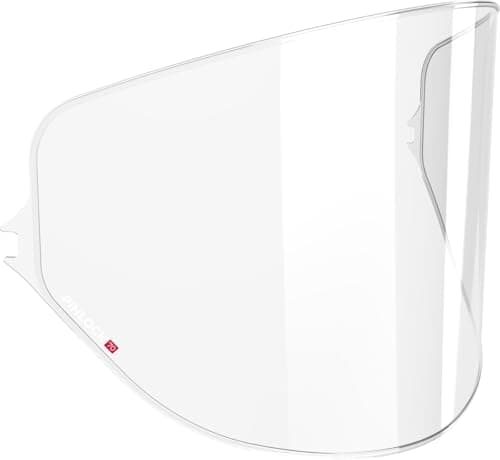
The only anti-fog solution that reliably survives a cold morning in stop-start traffic. A second lens sealed to the inside of your shield creates an insulating air gap, and Pinlock's moisture-absorbing surface handles what still gets through.

The real fix
8.8
$36.51Amazon
03
Alpinestars Alpinestars Tourer W-7 V2 Drystar
Alpinestars Tourer W-7 V2 Drystar

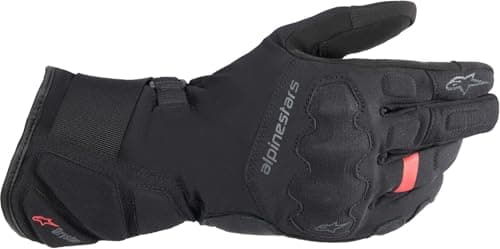
The cold-and-wet answer: a waterproof, insulated Drystar touring glove with knuckle protection that keeps your hands working when the temperature drops and the road is wet.

Best winter / waterproof
8.5
$129.95Amazon
04
Alpinestars Alpinestars Radon Drystar
Alpinestars Radon Drystar

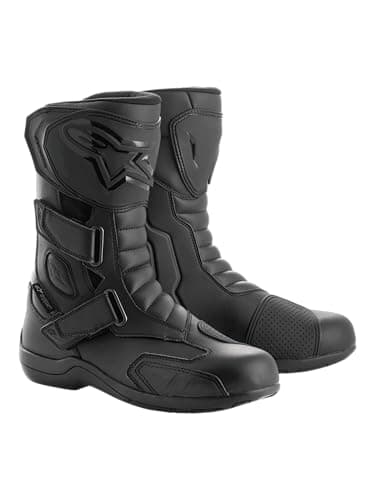
The certified waterproof default: CE certified to EN 13634:2010 with a Drystar membrane, dual-density ankle protectors and a TPU shin plate — a real protective boot that happens to also keep the rain out.

Best waterproof boot overall
8.5
$259.95Amazon

#ad · Live prices from the Amazon Product API, as of October 5, 2026. Where we have no verified live price we show none — we would rather leave a gap than print a number that has rotted.

In detail

The picks, in full

01
Alpinestars Alpinestars Bogota Pro Drystar

Best waterproof jacket overall

Alpinestars Bogota Pro Drystar

EN 17092 AA classNucleon Flex Pro CE L2Drystar membraneTech-Air ready
9.0/10

CE Category II certified to EN 17092 AA class with CE Level 2 shoulder and elbow armor and a Drystar membrane — a genuine four-season touring shell that publishes every number that matters.

Certification
9.7
Waterproofing
9.4
Armor
9.4
Versatility
9.2
Value
7.4

Pros

  • AA garment class plus CE Level 2 shoulder and elbow armor — the strongest published pair here
  • Three-layer liner-to-drop system reconfigures for wet, cold or dry without changing jackets
  • Tech-Air 5 and Tech-Air 3 ready, with a back-protector pocket in the lining

Cons

  • The most expensive jacket on this page by a wide margin
  • Back protector is sold separately despite the pocket

Don't buy this if…

…your wet riding is an occasional commute — you are paying for a four-season touring shell you will not use.

$485.00View on Amazon

Price as of October 5, 2026. Prices change — Amazon's is the one that counts.

#ad · we may earn a commission from this link to Alpinestars Bogota Pro Drystar

02
Pinlock Pinlock 70 Max Vision Insert

The real fix

Pinlock 70 Max Vision Insert

Sealed second lensMoisture-absorbing surfaceModel-specific fitmentRequires pinned visor
8.8/10

The only anti-fog solution that reliably survives a cold morning in stop-start traffic. A second lens sealed to the inside of your shield creates an insulating air gap, and Pinlock's moisture-absorbing surface handles what still gets through.

Fog resistance
9.8
Durability
8.6
Optical clarity
9
Ease of fitting
8.4
Value
8

Pros

  • A physical air gap, not a coating — it does not wear off, wash off or need reapplying
  • Max Vision profile covers more of the eye port than the older shorter lenses
  • Pinlock publishes graded anti-fog performance levels so you can match the lens to your climate

Cons

  • Strictly model-specific — this listing fits HJC HJ-34 visors, and the wrong lens simply will not seal
  • Your visor must have Pinlock pins; many budget helmets do not
  • The inner lens scratches more easily than the shield, so cleaning technique matters

Don't buy this if…

…your helmet has no Pinlock pins on the shield — check first, because the insert cannot be retrofitted to a smooth visor.

$36.51View on Amazon

$39.508% off

Price as of October 5, 2026. Prices change — Amazon's is the one that counts.

#ad · we may earn a commission from this link to Pinlock 70 Max Vision Insert

03
Alpinestars Alpinestars Tourer W-7 V2 Drystar

Best winter / waterproof

Alpinestars Tourer W-7 V2 Drystar

Waterproof DrystarInsulatedKnuckle protectionTouring cut
8.5/10

The cold-and-wet answer: a waterproof, insulated Drystar touring glove with knuckle protection that keeps your hands working when the temperature drops and the road is wet.

Protection
8.2
Fit/feel
8
Weather
9.6
Durability
8.6
Value
8.2

Pros

  • Waterproof, windproof Drystar membrane with insulation
  • Keeps dexterity better than most winter gloves
  • Knuckle protection and a long, sealing cuff

Cons

  • Too warm for summer
  • Bulkier feel than a summer glove

Don't buy this if…

…you only ride in warm, dry weather — this is a cold-and-wet specialist.

$129.95View on Amazon

Price as of October 5, 2026. Prices change — Amazon's is the one that counts.

#ad · we may earn a commission from this link to Alpinestars Tourer W-7 V2 Drystar

04
Alpinestars Alpinestars Radon Drystar

Best waterproof boot overall

Alpinestars Radon Drystar

CE EN 13634:2010Drystar membraneDual-density ankleTPU shin plate
8.5/10

The certified waterproof default: CE certified to EN 13634:2010 with a Drystar membrane, dual-density ankle protectors and a TPU shin plate — a real protective boot that happens to also keep the rain out.

Protection
9
Fit/comfort
8.2
Weather
9.6
Walkability
7.4
Value
8.4

Pros

  • Published CE EN 13634:2010 certification — not just a waterproof claim
  • Drystar waterproof and breathable membrane sits between the upper and the lining
  • Dual-density ankle protectors on both sides, plus a TPU shin plate and shift pad
  • Three lateral hook-and-loop straps let you dial the closure around your calf

Cons

  • Microfiber upper does not develop the character of leather
  • Stiffer to walk in than a touring boot with a softer sole

Don't buy this if…

…you want a boot that passes for street footwear off the bike — this looks like what it is.

$259.95View on Amazon

Price as of October 5, 2026. Prices change — Amazon's is the one that counts.

#ad · we may earn a commission from this link to Alpinestars Radon Drystar

Where the water actually gets in

Entry pointWhat goes wrongThe fix
NeckWater runs off the helmet, down the collar and inside the jacketA closed collar plus a neck tube or the helmet's own skirt
CuffsRain tracks along the forearm and into the gloveGauntlet over the sleeve, or a cuff that cinches over the glove
Waist and hemSpray off the front wheel; the jacket rides up when you lean forwardAdjustable hem, and a jacket long enough in the riding position
Boot topsTrouser leg funnels water straight into the bootOvertrousers outside the boot, never tucked in
VisorFogs inside, beads outside — you stop being able to seeAnti-fog insert, breath guard, cracked visor at low speed

The gap nobody closes: trouser leg over boot

The single most common wet-weather mistake is tucking waterproof trousers into the boots because it looks tidier. A trouser leg inside a boot is a funnel: every drop that lands on your thigh runs down the inside of the fabric and collects in the boot, which then cannot drain. Overtrousers go outsidethe boot, every time, so water runs down the outside and off. The same logic applies at the wrist — a gauntlet glove goes over the jacket sleeve, not under it, so the sleeve sheds water onto the outside of the glove rather than into it.

Fog is the real safety problem, and it is cheap to fix

Everything else on this page is comfort. A fogged visor in traffic is not. The physics is simple: your breath is warm and wet, the inside of the visor is cold because the outside is being hit with rain at 50 mph, and the moment the two meet you get condensation across your entire field of view. Cracking the visor open clears it and lets the rain in; riding with it open is how people end up squinting through water.

A Pinlock-style insert solves it mechanically rather than chemically. It is a second lens that seals to the inside of the visor with a silicone bead, creating a thin trapped air gap so the inner surface never gets cold enough to condense. It is the cheapest item on this page and the one we would buy first. Our anti-fog inserts ranking covers fitment, and our guide to stopping visor fog covers the rest, including why a breath guard is worth fitting at the same time.

One thing no insert fixes: water beading on the outside of the visor at night, where every streetlight becomes a starburst. The only real answers are slowing down, increasing your following distance and keeping the visor clean so water sheets off rather than clinging.

Cold and wet is a different problem from cold

Wet gear conducts heat away from you far faster than dry gear, so a rainy 55°F ride feels colder than a dry 45°F one. That is why waterproof gloves are on this list and why we picked an insulated waterproof pair rather than a thin summer glove with a membrane. Hands are the first thing to stop working, and brake and clutch control is not optional. If the forecast is cold and wet, our cold weather gear guide and layering guideare the companion reads — and heated grips, covered in our heated grips vs heated gloves comparison, do more for wet hands than any glove upgrade.

Boots are where people compromise, and it ruins the day

A wet foot stays wet for the rest of the ride and most of the next day, because nothing inside a boot dries while you are wearing it. The fix is a boot with a published membrane and a certification, not a leather boot with a waterproofing spray on it. Our pick here publishes CE EN 13634:2010 with a Drystar membrane, dual-density ankle protectors and a TPU shin plate — a protective boot that is also waterproof, in that order. Our waterproof boots ranking covers the full field, and EN 13634 explained covers what the certification on the side of the box actually means.

The four pieces, and what each one solves

Buy the Alpinestars Bogota Pro Drystar if you want one jacket that is certified AA as a garment, carries CE Level 2 armor and keeps the rain out through a Drystar membrane rather than a plastic overlayer. Buy the Pinlock insert first regardless of budget — it is the cheapest thing here and the only one that affects whether you can see. Buy the Alpinestars Tourer W-7 V2 Drystar gloves if your hands go numb and useless in the wet, which is the failure that actually makes rain riding dangerous. And buy the Alpinestars Radon Drystar boots if you ride in the rain more than occasionally, because a wet foot does not recover mid-ride. For the complete kit from scratch, our gear checklist and commuting gear guide are the wider lists.
How we picked

We don't test helmets. Here's what we do instead.

Everyone in this category says they tested twenty helmets. We haven't tested any — and we say so. What we do instead: compile the published DOT, ECE 22.06 and Snell certifications, the manufacturer's fit, weight and shell specs, the CE armor levels, and reputable published reviews, then score each pick against a published rubric. The scores are judgments from documented research — not measurements we took, because we do not run a lab and we are not going to pretend we do. Every certification and spec claim traces to a source we name and link.

Questions

Frequently asked

Do I need a rain suit if my jacket is waterproof?
Usually not for the torso, but overtrousers are a different question — most riders have a waterproof jacket and ordinary riding trousers, and the legs are what get soaked. If you do wear overtrousers, put them on outside the boots. Tucking them in turns the trouser leg into a funnel straight into the boot.
What is the first thing to buy for riding in the rain?
An anti-fog visor insert. It is the cheapest item on this page by a wide margin and the only one that affects whether you can see out of the helmet. Everything else on the list is about staying comfortable; the visor is about not riding blind in traffic.
Is a laminated jacket better than a zip-in waterproof liner?
In sustained rain, yes. A laminate bonds the membrane to the outer fabric so the shell never soaks up water and stays light; a drop-liner leaves the outer fabric to wet out and get heavy, though it is more versatile across seasons because you can take the membrane out. Our waterproof jackets ranking compares the constructions directly.
Can I waterproof gear I already own?
You can refresh a durable water repellent finish on an outer fabric, and it helps water bead rather than soak in. What you cannot do is add a membrane. A jacket with no waterproof layer will not become waterproof from a spray, and treating leather with a conditioner is maintenance, not sealing.
Why are my hands cold even in waterproof gloves?
Because wet fabric conducts heat away faster than dry fabric, so a rainy 55°F feels colder than a dry 45°F, and because water running down your sleeve gets in at the cuff whatever the glove is made of. Wear gauntlets over the jacket sleeve, and consider heated grips — they heat the palm directly, which no glove can do.
Is it more dangerous to ride in the rain?
Grip is lower, visibility is worse in both directions and the first rain after a dry spell lifts oil off the road surface. None of that is an argument for wearing less protection — it is the argument for wearing more. Every pick on this page publishes a protection standard as well as a waterproofing claim, which is the point of the list.

Keep reading

Receipts

Sources

We do not run a testing lab, and we do not pretend to. Our picks are built from published certifications, manufacturer spec sheets, the standards documents themselves, and reputable published reviews — named and linked above. Where we could not verify something, we say so on the page rather than quietly leaving it out. Read our full method.