An adventure jacket is asked to do two jobs that pull in opposite directions. On the highway it is a touring jacket: waterproof, warm enough at dawn, armored for a high-speed slide. Off the pavement it is a work jacket: you are standing on the pegs, sweating, and the crash the jacket is built around is a slow tip-over onto rock, where the elbow, the shoulder and the chest take the hit. A good one handles both. A great one handles both and tells you, in writing, what it was certified to.
That last part is where this ranking starts. The rating that describes the jacket itself, the fabric, the seams and how the panels are zoned, is the garment's EN 17092 class: AAA, AA or A. It is a separate claim from the CE level on the armor inside, which only says how the shoulder, elbow, back or chest protector absorbs an impact. Three of the five jackets here publish a garment class, and all three publish AA. The other two publish armor levels and, in one case, fabric deniers, and nothing about the garment. We rank them on exactly that, and our CE armor levels guide takes both standards apart if the letters are new to you.
We ranked adventure jackets by asking four questions, in this order:
- What garment class does the maker publish, and does it name the standard and the year? A class is the only published evidence of how the shell resists abrasion. No class, no evidence, and the ranking says so.
- What armor is actually in the box? Adventure crashes load the chest and the back as often as the shoulder. A prepared pocket is not a protector, and a foam pad is not armor.
- Laminate or liner, and does the maker rate the membrane? A laminated shell stays light in rain and cannot be removed; a drop-liner system can be stripped to a vented shell on a hot day and soaks up water when it is not. Only one maker here puts a number on its membrane.
- How does it handle heat? Vent count, mesh panels and removable layers, because an adventure jacket you cannot stand to wear in August is a jacket that stays home.
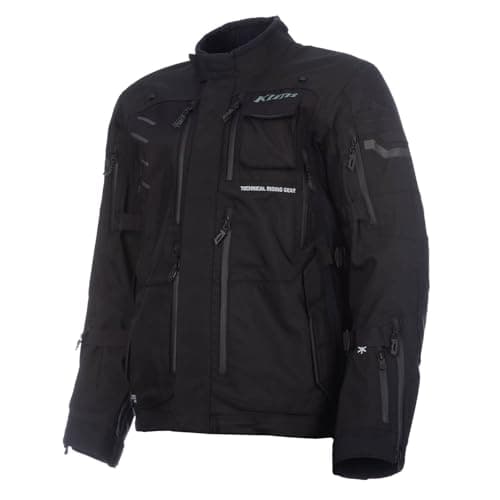
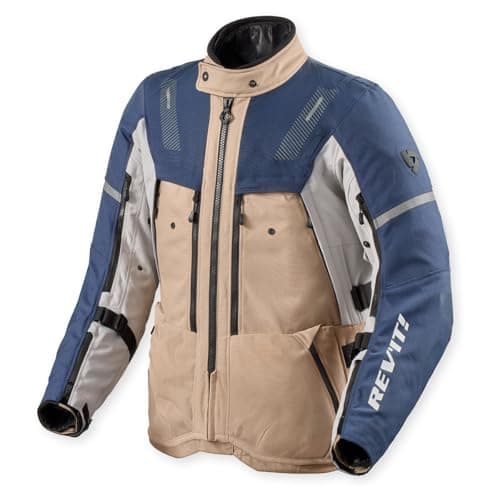
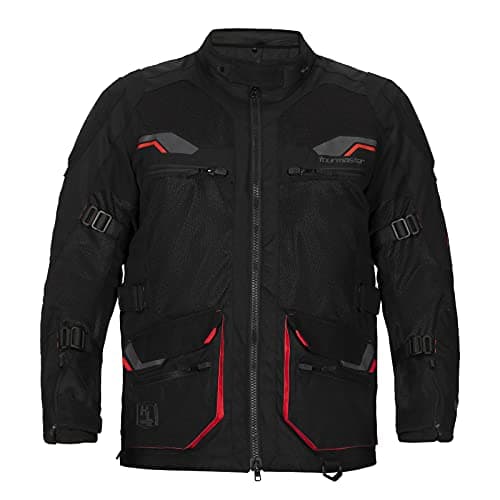
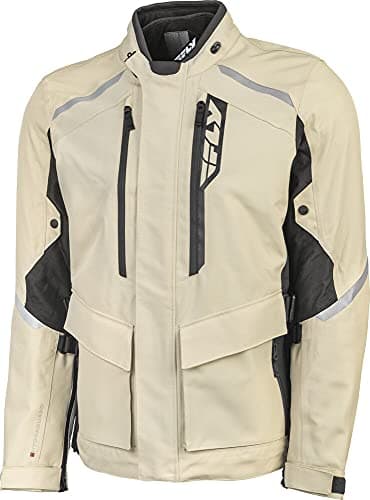
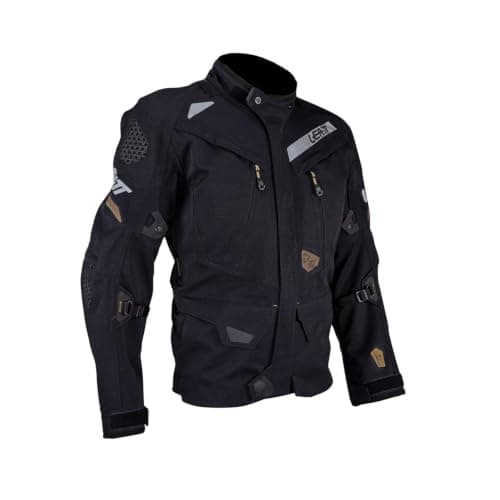
Price comes last, and it reorders the top of the page. The Leatt ADV DriTour 7.5 is our top pick because it publishes the most: Class AA, Level 2 armor in all four zones including the chest, and a laminate rated at 35,000 mm, for a mid-range price. The KLIM Badlands Pro is the expedition benchmark with the same class, GORE-TEX Pro, the longest vent list and 14 pockets, at the highest price here. The REV'IT! Sand 5 H2O is the three-layer system for riders whose seasons swing, with an empty back pocket that its card does not hide. The Tourmaster Ridgecrest Mesh is the hot-weather and budget pick, with Level 2 armor and published deniers but no garment class. And the FLY Racing Terra Trek is the value waterproof shell, ranked last because it publishes the least.
We have not crash-tested these jackets, worn them across a continent or run a lab. Every specification below is quoted from the maker's own product page, every source is linked at the bottom, and where a maker does not publish something, the card says so instead of guessing. If your riding is all pavement, our touring jackets ranking is the better list; if it is all textile shopping without the off-road brief, the textile jackets ranking covers the wider field.
The garment class is the gate, and three of five clear it
EN 17092 rates the whole garment on abrasion, tear and seam strength and sorts it into classes. AAA is the highest, built for sport and fast touring. AA is the strong all-round road class. A is lighter protection, common on hot-weather gear. The three certified jackets here all publish AA, and all three name the standard: Leatt writes "EN 17092-3-2020, Class AA tested and certified," KLIM writes "CE AA rating certified to EN 17092-3," and REV'IT! writes "Class AA certified according to standard EN 17092-3:2020."
Tourmaster and FLY publish no garment class for the Ridgecrest or the Terra Trek. Both name the armor standard, EN 1621-1, and Tourmaster names its fabric deniers, which is more than most budget jackets manage. But a denier is a yarn weight, not a test result, and an armor level says nothing about the shell. We rank both on what is documented and no higher.
One jacket was left off for the opposite reason. KLIM's Badlands Pro A3 is sold as the first AAA textile adventure jacket, and RevZilla's spec sheet says "approved to EN17092-2 as a CE Class AAA garment." KLIM's own product page, when we read it, said "pending CE AAA rating." When the maker and the retailer disagree, we rank on the maker, and a pending rating is not a rating. The standard Badlands Pro, with its AA published by KLIM itself, is the one on this page.
Armor in the box, zone by zone
Back. Only the two laminates ship with a certified back protector: Leatt includes an EN 1621-2 Level 2 back protector, and KLIM includes a D3O Viper Pro CE Level 2 vented back pad. REV'IT! ships a prepared pocket for a SEESOFT CE-level 2 insert and does not include it. Tourmaster includes a removable EVA foam pad, and FLY a removable PE pad; neither is a certified protector. If you buy either of the last three, read our back protectors ranking before the first trip, because a foam pad protects the pocket, not your spine.
Chest. This is the zone adventure riders most often forget and most often land on. Leatt is the only maker here that ships certified chest armor: EN 1621-3 Level 2. KLIM fits perforated XRD foam chest pads and does not call them certified. REV'IT! prepares the chest for divided SEESOFT Level 1 inserts, sold separately. Tourmaster and FLY list no chest protection at all.
Shoulders and elbows. Four of the five publish Level 2: Leatt (EN 1621-1 Level 2), KLIM (Aero Pro D3O CE Level 2, adjustable at the elbow), REV'IT! (SEEFLEX CE-level 2, adjustable height at the elbow) and Tourmaster (CE certified to EN 1621-1 Level 2). FLY publishes CE Level 1 conforming to EN 1621-1, the one Level 1 limb set on the page.
Laminate vs liner is a riding-style decision, not a quality one
A laminate bonds the waterproof membrane to the outer fabric. The shell never soaks up water, so it stays light in a day of rain and dries fast, and the whole jacket is one layer to manage. The cost is that you cannot take the waterproofing off: on a hot day you open vents. The Leatt and the KLIM are laminates. Leatt calls its shell direct-laminated and rates it at 35,000 mm waterproof and 15,000 g/m2 breathable, the only membrane figure any maker on this page publishes. KLIM uses a GORE-TEX 3-layer Pro shell and publishes no number, which is normal for GORE-TEX-licensed garments but still means Leatt is the only one you can compare.
A drop-liner or three-layer system puts the membrane in a separate layer you can zip out, which is what the REV'IT! Sand 5 H2O does with its hydratex 3L liner and its thermal liner. The upside is range: liner out and vents open, it is a hot-weather shell; both liners in, it is a winter jacket. REV'IT!'s over-and-under design also lets the waterproof liner go over the shell in heavy rain so the outer fabric does not wet out, which answers the classic drop-liner complaint. The downside is three pieces to carry and a shell that, worn conventionally, gets heavy when soaked.
The Tourmaster is a mesh shell with a Reissa waterproof zip-out liner, which is the drop-liner idea taken to its hot-weather extreme: the shell keeps nothing out and the liner keeps everything out. The FLY is the reverse: FLY describes the Hydraguard shell itself as windproof, waterproof and breathable, with a thermal liner inside, but does not say whether it is laminated or coated. Our waterproof jackets ranking goes deeper on membrane construction and seam taping.
Heat, because adventure riding is hard work at low speed
Standing on the pegs over rough ground at 15 mph makes no airflow and a great deal of sweat, which is why vent count matters more on an adventure jacket than on any other textile. KLIM publishes the most: two wrist vents, four core vents, bicep intakes, tricep and back exhausts. REV'IT! lists zippered fold-down chest panels and back panels, and strips to a vented shell with the liners out. Leatt lists chest vent zippers and a large mesh back panel. The Tourmaster is mesh, full stop. FLY publishes no vent detail beyond the shell's breathability. If your riding is mostly hot and mostly slow, that order is close to the ranking you want; if it is mostly wet and mostly fast, it is close to the reverse.
The adventure extras: hydration, pockets, fit
Two jackets here are built around a hydration bladder: KLIM names a hydration compartment among its 14 pockets, and REV'IT! prepares a 1.5 L hydration pocket. Leatt, Tourmaster and FLY do not list one. KLIM, Tourmaster and FLY all offer tall sizes, which matters more in an adventure jacket than most because you spend so much of the day with your arms forward on wide bars; REV'IT! sells a regular fit from S to 4XL, and Leatt runs S to 5XL. Our how to choose a jacket guide covers the fit checks, and they apply doubly here: check the elbow armor with your arms bent and forward, not hanging at your sides.
Which one should you buy?
Buy the Leatt ADV DriTour 7.5 if you want the most documented protection for the money on this page: Class AA, Level 2 everywhere including the chest, a rated laminate, and the longest warranty. Buy the KLIM Badlands Pro if you are riding far, wet and hard enough to load a GORE-TEX Pro shell and 14 pockets, and compare the Amazon price against KLIM's own store first, because the two were far apart when we checked. Buy the REV'IT! Sand 5 H2O if your seasons swing and you want one jacket that strips to a vented shell and builds back to a winter one, and budget for the back protector it does not include. Buy the Tourmaster Ridgecrest Mesh if heat is your main enemy and the budget is real: it publishes Level 2 armor and its fabric, and you will replace the foam back pad. And buy the FLY Racing Terra Trek only if a waterproof shell at its price is the deciding factor and you accept that FLY has told you the least about it. Finish the kit with our adventure helmets and adventure boots rankings, which apply the same published-spec method.