There is a distinction in this category that almost nobody explains, and it changes what you should buy. Some products sold as "chest protectors" are certified impact protectors under EN 1621-3 — they are tested for how much force they absorb and transmit. Others are certified roost deflectors or stone shields under EN 14021 — tested for stopping flying dirt and stones, which is a genuinely useful but completely different job. A plastic shell can be excellent at the second and offer almost nothing on the first. Neither standard is better; they answer different questions, and the marketing rarely distinguishes them.
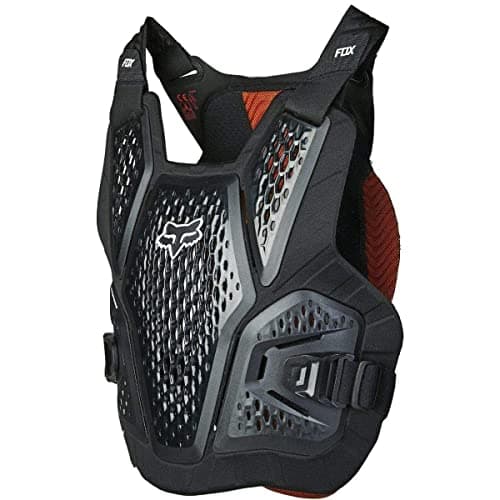
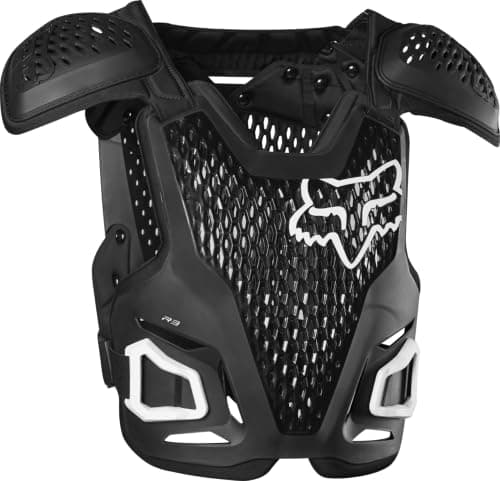
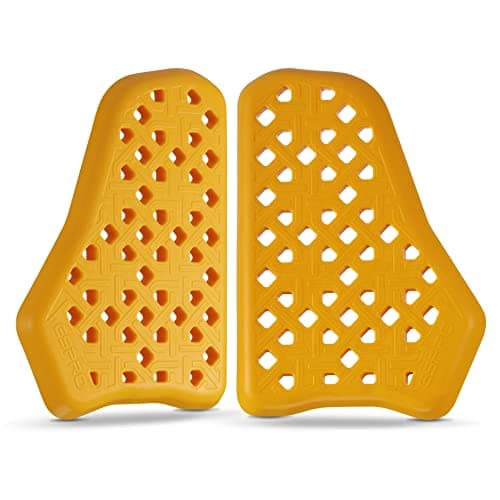
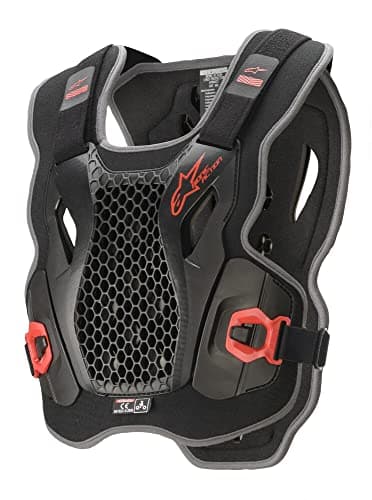
So we ranked on the certification each product actually publishes. The Alpinestars Bionic Action takes the top spot because it is certified at both ends: CE Level 1 to EN 1621-3 across the chest and CE Level 1 to EN 1621-2 across the back, in one ventilated harness. The Fox Racing Raceframe uses D3O impact material and suits adventure and off-road riders who want flexible protection. The Fox R3 is an honest, well-made roost deflector certified to EN 14021 — and we say so plainly rather than letting the name imply more. And the Surlim CE Level 1 inserts are the cheapest way to get certified chest protection into a jacket you already own.
Most riders end up carrying chest armor in something rather than wearing a dedicated protector, which is what our armored shirts guide is about — including how to tell a certified insert from an unmarked foam pad.
Chest protection is the most-skipped piece of the torso stack. Most riders own a jacket with shoulder, elbow and back armor and two empty chest pockets, which is a strange place to stop — see our body armor guide for how the pieces fit together.
EN 1621-3 vs EN 14021: the standard that decides everything
EN 1621-3 is the CE standard for motorcycle chest protectors. It drops a weighted striker onto the protector and measures the force transmitted through it, then rates it Level 1 or the tougher Level 2. That is an impact test, the same family as EN 1621-1 for limb armor and EN 1621-2 for back protectors.
EN 14021 is the standard for stone shields — roost deflectors. It tests whether the shell stops projectiles thrown up by the bike in front, which on a motocross track is a real hazard that hurts. It does not test impact absorption at all. A product certified to EN 14021 and not to EN 1621-3 is a debris shield, and the honest description of the Fox R3 is exactly that. Our CE armor levels guide maps the whole family of standards.
Do you actually need chest protection?
It depends on how you ride. On the road, the chest and ribs meet the tank, the bars, a curb or a car in a large share of serious crashes, and a certified chest protector spreads that load. Off-road, roost from the bike ahead is a constant, low-level battering and the risk of landing chest-first on a bar end is real. Neither case is exotic. What is true is that a chest protector ranks below a helmet, gloves, a jacket with shoulder and elbow armor, and a back protector in the order you should buy things — see do you need a back protector for where the torso pieces sit in that order.
Harness or insert?
There are two ways to get chest protection and they suit different riders. A harness-style protector — the Alpinestars, both Foxes — is a separate garment strapped over or under your jersey. It covers far more area, usually adds a back plate, and is the only sensible option off-road where roost coverage matters. An insert is a certified pad that slides into the chest pockets almost every armored road jacket already has. It covers less and protects a smaller area, but it is invisible, costs very little and you will never leave it at home — which is worth more than a rating you do not wear. If your jacket has empty chest pockets, filling them is the single cheapest safety upgrade available to you.
Coverage, fit and where the armor has to sit
Chest armor only works if it is over your sternum and ribs when you hit something, which means the harness has to be snug and adjusted. Check three things: the top of the plate clears your collarbone rather than riding up into your throat, the bottom does not dig into your stomach when you tuck forward on the bike, and the straps hold it still when you shrug. A protector that slides sideways in a crash is protecting your armpit. If you use a neck brace, compatibility is not optional — the Fox R3 is explicitly designed around one, and a protector that fouls a brace stops the brace working.
Ventilation is a safety feature, not a luxury
A chest protector sits over the largest, sweatiest part of your torso and traps heat exactly where a jacket already does. Off-road riders working hard at low speed feel this immediately, which is why every serious motocross protector — the Bionic Action's perforated chassis, the R3's ventilated shell, the Raceframe's airflow channels — is built around holes. An overheated rider makes bad decisions, and a protector you take off at the trailhead because you are cooking protects nothing.
Which one should you buy?
Buy the Alpinestars Bionic Action if you want certified impact protection at the chest and the back from one harness. Buy the Fox Raceframeif you want D3O's flexible impact material for adventure and off-road use. Buy the Fox R3 if roost is your actual problem and you want a certified stone shield that plays nicely with a neck brace. Buy the Surlim inserts if you ride the road in an armored jacket with two empty chest pockets — that is most riders, and it is the cheapest upgrade on this site. If you are weighing chest armor against an airbag vest, our airbag vest vs back protector comparison covers how inflatable protection changes the calculation.