The honest answer: a helmet that slid off your seat onto the pavement with nothing in it is very unlikely to be compromised, and a helmet that took an impact with your head inside it is finished regardless of how it looks.Everything in between is a judgment call, and the only way to make it properly is to understand what a drop does to the part of the helmet you cannot see — the expanded polystyrene liner under the shell — and then to inspect it carefully. If you cannot resolve the doubt, replace it: the helmet is the one piece of gear where the downside of being wrong is permanent.
Here is why the question is harder than it sounds. A motorcycle helmet protects your head by crushing. The outer shell spreads the load and resists penetration; the EPS liner underneath absorbs energy by permanently deforming, the way a car's crumple zone does. EPS does not spring back. So the damage that matters from a drop is a crushed or cracked area of liner that has already spent some of its capacity — and because the comfort liner and the shell hide it, a helmet can look perfect and have a compressed patch inside.
What makes that less alarming than it sounds: the amount of energy involved in a drop is small compared with what the helmet is designed for. A helmet falling from seat height with nothing inside it is a few pounds of shell and liner hitting the ground, with no head's worth of mass behind it. Certification tests under DOT, ECE 22.06 and Snelldrop an instrumented head form inside the helmet from a height onto a defined anvil — and ECE 22.06 requires multiple impact sites plus oblique impacts. A bare helmet tumbling off a mirror is a different and much smaller event.
The drops that matter, and the ones that mostly do not
| What happened | Realistic risk | What to do |
|---|
| Empty helmet slid off the seat or tank onto pavement | Low | Inspect carefully, keep using it if it passes |
| Knocked off a table or mirror, landed on carpet or grass | Very low | Inspect, keep using it |
| Dropped onto a sharp edge, curb, bolt head or tow hitch | Moderate to high — point loads are what penetrate | Inspect very closely; replace if anything is marked |
| Fell from a significant height onto concrete | Moderate | Inspect; replace if you cannot clear it |
| Any impact with your head inside it, at any speed | Assume it is used up | Replace. No inspection required. |
| Bike tipped over with the helmet on the seat and landed on it | High — the bike's weight is the point load | Replace |
How to inspect a dropped helmet
- Look at the shell in raking light. Hold it so light runs across the surface at a shallow angle. You are looking for cracks, crazing, star patterns, dimples, a flat spot or any area where the gloss changes. A scuff that only removed paint is cosmetic; a crack is not.
- Take the comfort liner and cheek pads out and look at the EPS. This is the real inspection. You want uniform, unbroken foam. What you are hunting for is a crushed or dented area, a crack, a line where the foam has separated, or a patch that feels denser or looser than the rest. Press gently with a thumb and compare symmetrical areas on both sides.
- Check whether the shell and the liner have come apart. The EPS is bonded or closely fitted inside the shell. If it moves, rattles or has lifted away anywhere, the helmet is not behaving as a unit any more.
- Check the hardware. Visor mechanism, the retention system and the chin strap and its D-rings or ratchet. A helmet that stays on your head is the first requirement; a bent or sticky mechanism is a reason to retire or repair.
- Try it on and feel for a change in fit. A compressed patch of liner often shows up as a helmet that suddenly feels loose or sits differently on one side. Our fit check is the reference for what correct should feel like.
What you cannot do is X-ray it, and nobody can tell you over the internet whether your particular helmet is fine. Some manufacturers will inspect a helmet or advise on a specific incident — it is worth contacting them before buying a replacement, particularly on an expensive lid.
The rules we apply, and why
Any impact with your head inside the helmet retires it. This is the one rule with no judgment in it. If your head was in the helmet when it hit something, the EPS absorbed energy the way it was designed to, and the material does not recover. This applies to a low-speed tip-over in a parking lot as much as to a crash, and it applies when there is no visible mark at all. You cannot see spent EPS through a comfort liner.
A point load is worse than a flat landing. Shell penetration resistance and liner crush are both tested against defined anvils, and a bolt head, curb edge or tow hitch concentrates a small amount of energy into a very small area. A helmet dropped onto a flat floor spread the load; a helmet dropped onto a trailer hitch may not have.
Doubt resolves toward replacement. A helmet is the cheapest insurance you own relative to what it protects, and the cost of being wrong is not recoverable. Our budget helmets ranking exists partly for this moment: a certified replacement does not have to be expensive.
What this is not about
Age is one retirement trigger and an incident is the other: our dropped helmet guide covers which drops matter, how to inspect the EPS liner, and why an impact with your head inside the helmet ends it regardless of how it looks.
The reason a used helmet is such a gamble is the drop you did not witness — our dropped helmet guide explains what a drop does to the liner and why an inspection cannot fully clear one.
Whatever you spend, gear is retired on condition rather than on price: our when-to-replace guide sets out the inspection for every piece, and what a crash retires on the spot.
Age and wear are a separate question, and they are the more common reason to replace a helmet. Liner breakdown, strap wear, shell degradation and the five-year rule of thumb are covered in how long helmets last, and the reason not to buy someone else's unknown history is covered in should you buy a used helmet — which is the same argument as this page, seen from the other side. A used helmet is a helmet whose drops you did not witness.
If the answer is replace
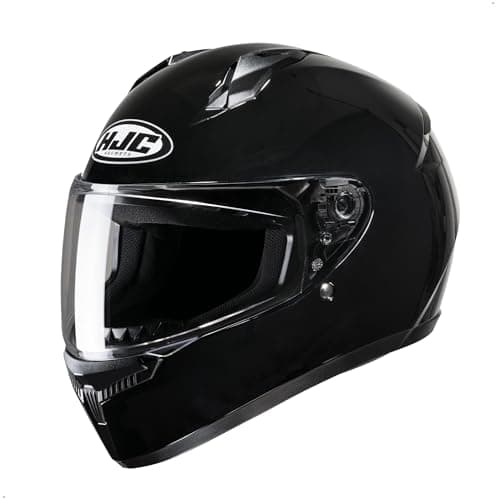
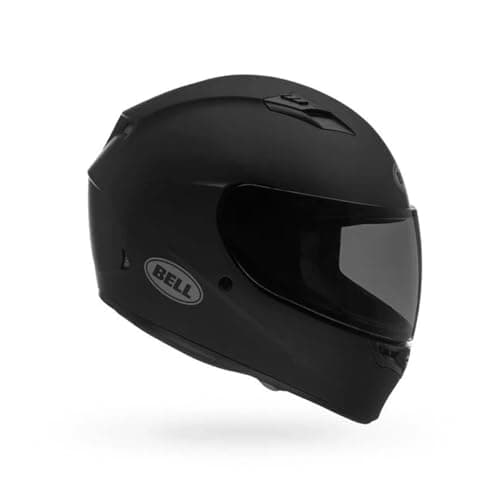
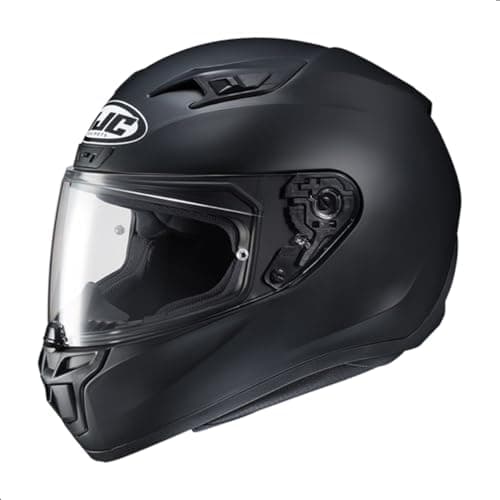
The three helmets below are the ones we would point a rider at who has just written off a lid and does not want to spend a fortune doing it again. All three publish real certifications, which is the only non-negotiable. They are ranked in full on our best helmets and best budget helmets pages.
| Replacement | Published certification | Why it is here |
|---|
| HJC i10 | DOT and SNELL (per the listing title) | The value pick across most of our helmet rankings |
| HJC C10 | DOT and ECE | The cheapest full face we will recommend |
| Bell Qualifier | DOT | Roomier fit, widely available, long-running model |
Habits that prevent the question
- Never park a helmet on the seat, the tank or a mirror. It is the single most common way helmets get dropped, and a helmet hung on a mirror is also being deformed by the mirror stalk.
- Use the helmet bag it came with.It is not just for storage — it stops the lid rolling off a surface and protects the visor.
- Put it on the ground, upside down, out of the traffic path. Unglamorous and effective.
- Keep the chin strap fastened when it is on a hook. A strapped helmet is harder to knock off.
While you have the liner out for the inspection above, it is a good moment to deal with the rest of the maintenance: our helmet cleaning guide covers washing the liner and the shield without damaging either, and our when-to-replace guide applies the same inspection logic to the rest of your kit.