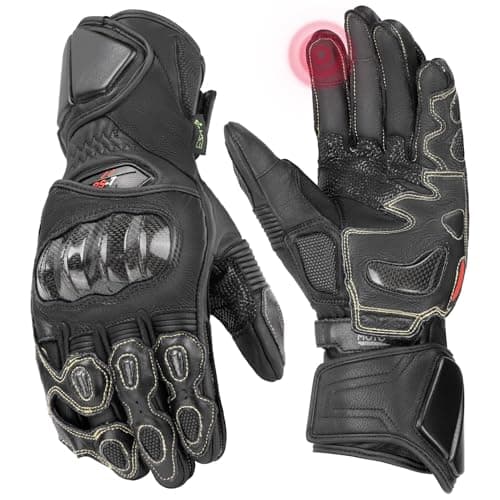
The best motorcycle glove under $100 is the Kemimoto leather glove— a CE-certified leather glove that tops our affordable ranking outright, and the one pick here that gives a street rider real hide, a hard knuckle and a certification claim without going over the cap. It is the pick for a commuter who wants one proper pair of gloves and nothing more complicated. The budget pick is the FIVE RS3 Evo Woman, the cheapest glove on this page and, unusually for its price, one that publishes 1 KP to EN 13594:2015. We have not tested any of these gloves. Every certification line, palm construction and closure detail below comes from a published spec sheet, and every price in the table is a live Amazon figure stamped with the date it was pulled.
The price ceiling, checked
As of November 23, 2026, all 6 of the gloves below with a verified live price were listed at or under $100. Amazon prices move daily; the comparison table below always shows the current figure, and shows nothing where we have no verified price.
The one fact that shapes this whole page
Under $100 the thing you are shopping for is not a better glove. It is a maker willing to print a number. EN 13594rates a riding glove on abrasion, impact, seam strength and restraint, and it produces a specific claim: a level, a KP marking for knuckle protection, and the revision year of the standard. What most gloves under $100 carry instead is “CE certified” with no level, no KP and no revision — which is a sentence, not a specification.
On this page two of six publish the full line: the FIVE RS3 Evo Woman at 1 KP to EN 13594:2015, and the REV'IT! Convergent H2O at CE Level 1 knuckle protection certified to EN 13594:2015. The other four publish less, and in one case — the Cortech Revo RR V2 — a glove with genuinely excellent published palm construction carries noEN 13594 claim anywhere on the maker's own spec page. We rank that honestly rather than assuming.
How this ranking was built
First, the published certification line, in full.The standard, the revision year and the level or KP marking. A bare “CE certified” scores lower than a printed level, and a glove with nothing at all scores lowest — and says so on its own card instead of being quietly ranked on vibes.
Second, palm construction, because the palm hits first.In a slide your hand goes down palm-first and rotates. What matters is layers and material: a double-layer palm beats a single layer, a reinforced thumb and heel beat a plain one, and a named reinforcement like SuperFabric with Kevlar stitching is a checkable claim. This is where the Cortech earns its place despite the missing certification — it publishes the palm in more detail than most gloves at any price.
Third, knuckle hardware. A hard molded or carbon knuckle shell over foam beats a soft KP-marked protector, which beats a thermoformed neoprene pad, which beats nothing. Note that the certification and the hardware can disagree: a soft protector can carry the KP mark while a harder shell carries no mark at all, and both facts appear on the relevant cards.
Then the closure, then value.A glove that comes off in a slide protected nothing, so a wrist strap plus a cuff closure beats a single elastic cuff. Nothing here is scored on a test we ran — the rubric is on our methodology page.
What $100 buys, and what it does not
It buys a real certification claim, if you choose for it. That is the headline, and it is why this page exists one tier above our under-$50 ranking, where exactly one pick printed a level. It buys a waterproof membrane with a name— the Convergent's hydratex Z-liner. It buys a carbon knuckle and a SuperFabric palm in the Cortech. It buys heated gloves, in the Savior Heat, which is a category that normally starts well above this cap. And it buys a four-year warranty, the longest on the page by a margin.
What it does not buy is an EN 13594 Level 2 glove.Not one pick here publishes Level 2, and the race-grade gloves that do — the ones that top our main glove ranking and the sportbike ranking— sit above this ceiling and are deliberately absent. It does not buy a palm slider on most picks, which is the hardware a sport rider actually wants. And it does not buy a published leather thickness anywhere on this page, which is a gap worth knowing about rather than guessing around.
Which pair, for whom
One pair of street gloves: the Kemimoto leather glove. For the commuter or weekend rider who wants real hide, a hard knuckle and a CE claim and does not want to think about it again. It is the pick that tops our affordable glove ranking, and the reason it headlines this page is arithmetic: it costs less than this cap and more than the entire ceiling of the under-$50 page, so this is the first band where it is available at all.
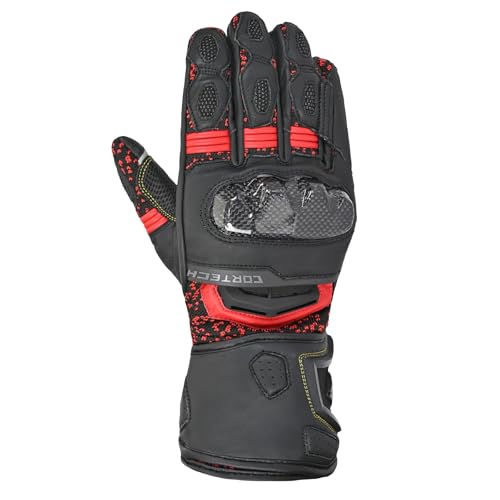
Best-built palm, no certification: the Cortech Revo RR V2. For the rider who reads spec sheets and wants the most construction per dollar. Abrasion-resistant goat leather with SuperFabric reinforcement at the impact zones and Kevlar stitching, under a floating carbon fiber knuckle, with TPR finger inserts, a TPU gauntlet cuff, double wrist closures and a four-year warranty. The honest catch is on its card in plain words: no CE or EN 13594 claimon Cortech's own page or on any retailer listing we read, and no palm slider named.
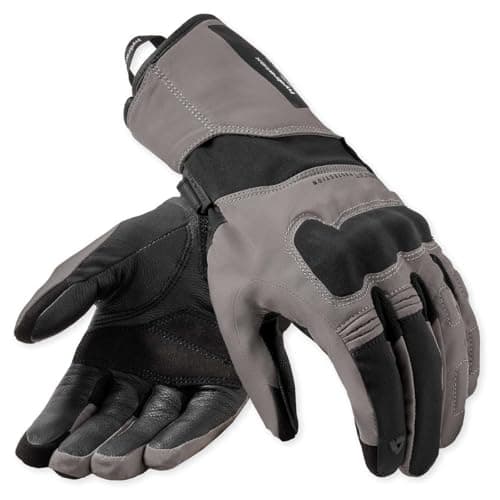
Wet riding with a full certification line: the REV'IT! Convergent H2O Women's.For a woman riding in rain who wants both the membrane and the paperwork. A hydratex Z-liner inside goatskin and PWR|shell ripstop, CE Level 1 knuckle protection certified to EN 13594:2015, sizes from 2XS. No insulation and a soft knuckle protector rather than a hard shell — both on its card. Our waterproof glove ranking explains why the cuff length matters more than the membrane name.
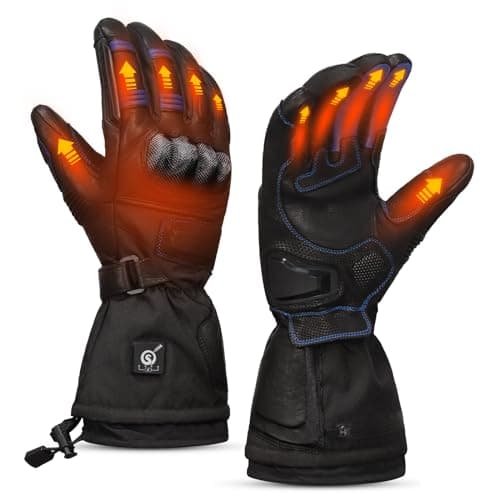
Heated hands under the cap: the Savior Heat glove.For the winter commuter whose hands stop working before the rest of them does. Battery-heated gloves normally start above $100, so this is the band's outlier. Read its card for the limits — and note the honest alternative: heated grips run off the bike and never need charging, which for a daily commuter is usually the better answer.
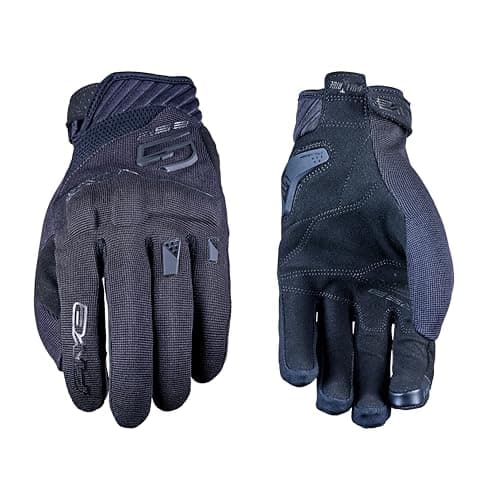
The cheapest glove here that still prints a level: the FIVE RS3 Evo Woman.For a woman who wants a summer glove with a published KP rating at the bottom of the price range. 1 KP to EN 13594:2015, a 4-way Spandex upper, PU knuckle and metacarpal shells, a TPR palm shell and a size run starting at XS. It is the lightest, most ventilated glove here and it has no leather and no membrane: a hot-weather glove, sold as one. Its card also records that the certification level comes from a European dealer spec sheet because FIVE's own page would not load for us.
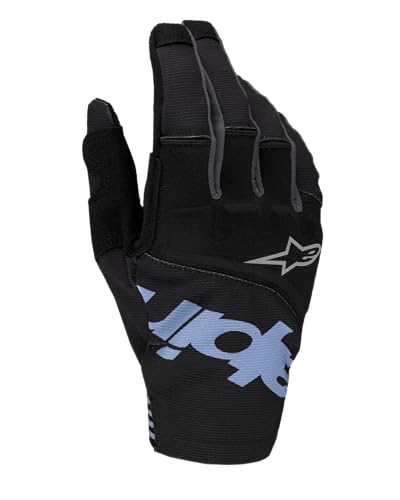
Off-road, best built: the Alpinestars Techstar glove. For the motocross or trail rider. A one-piece conductive palm with reinforced synthetic suede at the thumb and high-wear areas, a thermoformed neoprene knuckle, expansion seams on the first three fingers and a molded hook-and-loop strap. Ranked last here for one reason: a dirt glove is the wrong glove for pavement, and almost no motocross glove publishes EN 13594 — the full argument is in our dirt bike glove ranking.
The two things to get right whatever you buy
Size, because a glove that comes off protects nothing. Fingers just short of the ends, no bunching across the palm, and a closure you can tighten with the other hand already gloved. Our sizing guide has the measuring method and the two on-bike checks.
Then match the glove to the season rather than buying one pair for everything. Two $60 pairs — a vented summer glove and a waterproof cold-weather glove — cover a year far better than one $120 pair that is wrong half the time, because insulation cannot be vented away. Summer gloves and winter gloves are the two halves, and leather vs textile covers the material decision inside each.