The best helmet under $500 is the AGV K3 — ECE 22.06 certified, four front vents and a rear extractor with a published airflow description, built in three shells and four EPS sizes, for the rider who wants the current European certification and documented ventilation without flagship money. The budget pick is the ILM Bluetooth Modular, the cheapest helmet in this ranking, with a comms unit already in the shell — DOT only, with the least published behind it of anything here, and ranked last for exactly that reason. We have not tested any of these helmets. Every certification, shell and weight figure comes from the manufacturer's published specs or the retail listing, and every price in the table below is a live Amazon figure stamped with the date it was pulled.
The price ceiling, checked
As of November 19, 2026, all 7 of the helmets below with a verified live price were listed at or under $500. Amazon prices move daily; the comparison table below always shows the current figure, and shows nothing where we have no verified price.
Why $500 is the interesting ceiling
Because it is the price at which you stop having to compromise on the things that are actually tested. Under $500 you can buy ECE 22.06 — the current European standard, which added an oblique rotational-impact test and more impact points at more speeds than 22.05 ever ran. You can buy a genuine carbon shell (the Daytona C6). You can buy MIPS as standard rather than an upcharge (the Bell MX-9 Adventure). And you can buy a P/J dual-homologated modular — the Scorpion AT960, certified with the chin bar up as well as down, which most flip-ups are not.
What more than $500 buys is real, and it is almost entirely comfort rather than a higher certification floor: fewer grams, quieter aerodynamics, five shell sizes instead of three, hand-laid composite shells, better shield seals and better finish. Those things matter enormously over a ten-hour day. They are not the difference between a certified helmet and an uncertified one. If you want the long version of that argument, read are expensive helmets safer.
How this ranking was built
Published certification first, and specifically the revision on the strap — DOT FMVSS 218 is the US legal floor, ECE 22.06 is the most demanding of the mainstream standards in terms of what it tests, and Snell is a separate, voluntary program. Then shell material and published weight. Then shell and EPS count, because fit granularity is what decides whether the helmet is the right size rather than a bigger shell padded down. Then features, then value. Nothing here is scored on a test we ran — we do not have a lab, and the rubric is published on our methodology page.
Three of these seven are modulars and one has a comms unit built in, which is deliberate: under $500 the convenience features stop being a luxury tax and start being what the band is for. If a built-in intercom is the specific thing you are shopping for rather than a price ceiling, go to our Bluetooth helmet ranking instead — it compares integrated-comms lids against each other, including the two that appear here.
The short answer
| # | Product | Best for | Score | Price |
|---|
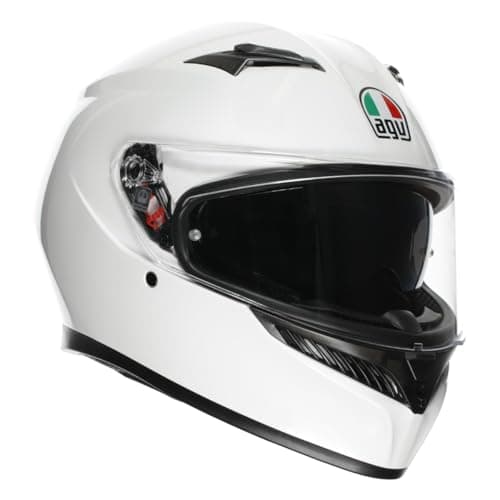
| 01 | AGV K3The fullest published vent count on the page - four front vents and one rear extractor - alongside ECE 22.06, three shell sizes, four EPS densities and a published weight. On a page about airflow, that is the whole argument. | Best documented airflow | | $247.57·Amazon |
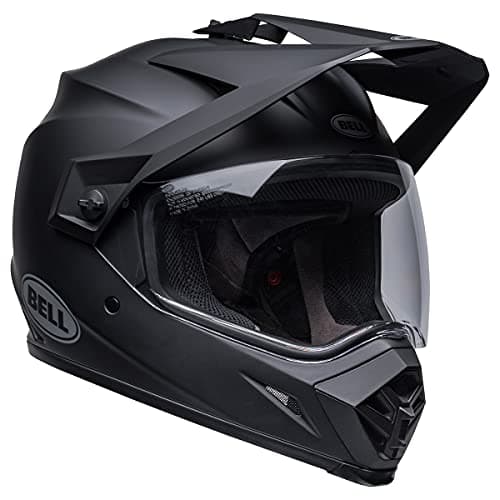
| 02 | Bell MX-9 Adventure MIPSThe adventure helmet most riders should buy: DOT and ECE certified, MIPS rotational-impact liner as standard, a removable peak and a real face shield, at a price that leaves money for the rest of the kit. | Best adventure helmet overall | | $249.95·Amazon |
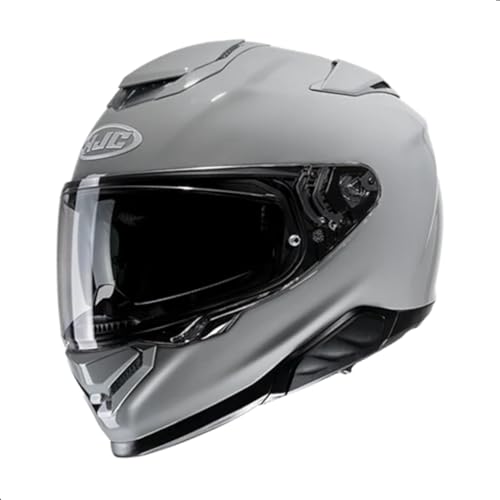
| 03 | HJC RPHA 71HJC's touring-sport lid built around a named channeling system: the Advanced Channeling Ventilation System runs air channels through the inner shell rather than just cutting holes in the outer one, on a four-shell-size composite with the Pinlock lens included. | Best channeled ventilation | | $403.56·Amazon |
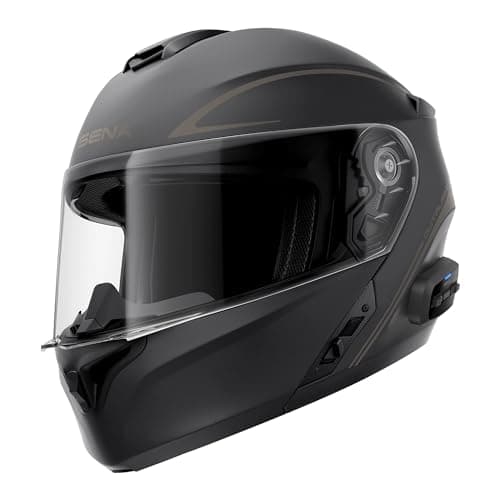
| 04 | Sena Outrush RThe cleanest do-it-all Bluetooth lid: a DOT-certified modular helmet with Sena's intercom built in, so there are no stick-on speakers, no dangling wires, and one thing to charge. Worth knowing it is now the earlier generation — Sena has followed it with the Outrush 2, which adds Mesh 3.0 and an ECE approval alongside DOT. | Best built-in Bluetooth | | $359.00·Amazon |
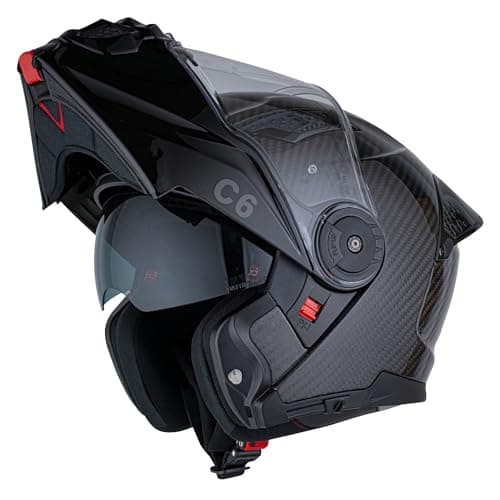
| 05 | Daytona C6 Carbon FiberThe cheapest way onto this page that still publishes both DOT FMVSS 218 and ECE 22R06, in a carbon modular with a Pinlock 120 insert and a drop-down sun shield included. | Best value carbon helmet | | $440.96·Amazon |
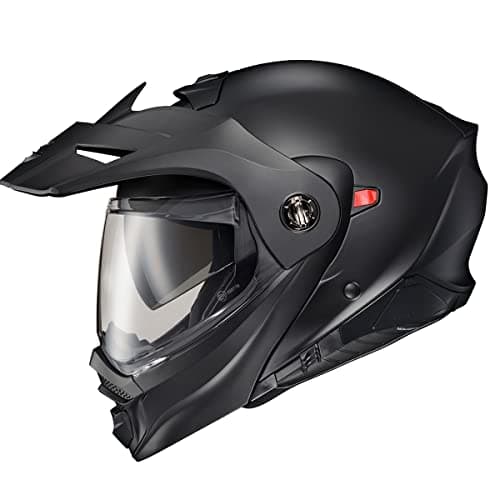
| 06 | ScorpionEXO EXO-AT960The adventure lid that flips: P/J dual-homologated to ECE 22.06 so it is certified with the chin bar up as well as down, with a drop-down sun visor and a peak — the most useful helmet here for mixed pavement-and-dirt days. | Best modular adventure helmet | | $314.95·Amazon |
| 07 | ILM Bluetooth ModularThe budget entry to built-in comms: a DOT-certified flip-up with Bluetooth, a sun visor and a Pinlock-style anti-fog insert for less than a standalone headset often costs. | Cheapest built-in comms | | $219.99·Amazon |
#ad · Live prices from the Amazon Product API, as of November 19, 2026. Where we have no verified live price we show none — we would rather leave a gap than print a number that has rotted.
In detail
Best documented airflow
4 front vents + 1 rear extractorECE 22.063 shells / 4 EPS sizes1,630 g (first shell size)
The fullest published vent count on the page - four front vents and one rear extractor - alongside ECE 22.06, three shell sizes, four EPS densities and a published weight. On a page about airflow, that is the whole argument.
- Published ventilation
- 9.4
- Certification
- 8.8
- Shell/weight
- 8
- Fit range
- 8.8
- Value
- 9
Pros
- +AGV publishes a countable ventilation spec: 4 front vents and 1 rear extractor, with adjustable air vents - more openings than any other maker on this page publishes
- +ECE 22.06 homologation, the current European revision, on a high-resistance thermoplastic shell
- +Three shell sizes with multi-density EPS developed in four sizes, so the fit is genuinely sized rather than padded out
- +Published weight of 1,630 g in the first shell size, and AGV states a collarbone-safe profile optimized across riding positions
- +Pinlock-equipped anti-fog face shield plus a drop-down sun shield, both in the box
Cons
- −A thermoplastic shell, not a composite - the Bell and the HJC here both use fiber shells and the Bell is roughly 380 g lighter
- −AGV publishes ECE 22.06 but we could not confirm a Snell certification for this model
- −Four front vents is a real figure but AGV does not publish an airflow rate, so the count is a proxy and we treat it as one
- −Amazon stock is colorway- and size-specific; check the exact listing before ordering
Don't buy this if…
…weight is your priority: the Bell Race Star Flex DLX publishes 3.57 lbs on a 3K carbon shell, and this is the heaviest helmet here.
Best adventure helmet overall
DOT · ECE 22.06MIPS3 shell sizesRemovable peak
The adventure helmet most riders should buy: DOT and ECE certified, MIPS rotational-impact liner as standard, a removable peak and a real face shield, at a price that leaves money for the rest of the kit.
- Certification
- 9
- Weight
- 7.4
- Versatility
- 9.2
- Ventilation
- 8.8
- Value
- 9
Pros
- +MIPS low-friction layer is standard, not an upcharge
- +Two-point removable peak plus an adjustable face shield — three configurations from one lid
- +Velocity-flow venting and NutraFog II anti-fog coating
- +Now listed to ECE 22.06, the current revision with its own oblique-impact test
Cons
- −Polycarbonate shell, so heavier than a composite ADV lid (Bell lists 3.74 lb)
- −No internal drop-down sun visor — you swap the shield or ride in sunglasses
Don't buy this if…
…you want the lightest possible helmet for all-day highway miles — a composite shell saves real weight on your neck.
Best channeled ventilation
Advanced Channeling Ventilation SystemPremium Integrated Matrix shell4 shell sizesHJ-40 Pinlock shield included
HJC's touring-sport lid built around a named channeling system: the Advanced Channeling Ventilation System runs air channels through the inner shell rather than just cutting holes in the outer one, on a four-shell-size composite with the Pinlock lens included.
- Published ventilation
- 8.8
- Certification
- 8.6
- Shell/weight
- 8.4
- Fit range
- 9
- Value
- 8.2
Pros
- +Ventilation is channeled, not just vented: HJC's ACS routes intake air through channels integrated into the inner shell and out through rear exhausts, rather than relying on holes in the outer shell alone
- +Premium Integrated Matrix shell - HJC's fiber blend of glass, aramid, carbon and organic fibers - across four shell sizes, the second-widest shell count here
- +Central chin ventilation that HJC notes is operable with gloves on, plus a large closable top intake and two rear air outlets
- +Ships with the HJ-40 Pinlock-ready shield, and the model carries an integrated drop-down sun visor
- +DOT approved per the US listing, with ECE 22.06 homologation on the European version of the same helmet
Cons
- −We could not verify a single consistent published weight for the US-market RPHA 71, so this page does not quote one - the AGV, LS2 and Bell all publish theirs
- −HJC's US listing does print a count - full front-to-back ventilation with 2 intakes and 2 exhausts - but that is fewer openings than the AGV publishes, and HJC still gives no airflow rate
- −No Snell certification published for this model
- −Amazon stock runs thin and is colorway-specific; check the size you need is listed
Don't buy this if…
…you want a published weight before you buy: HJC is the one maker here that does not give you a number you can compare.
Best built-in Bluetooth
DOTModular flip-upIntegrated Sena intercomVoice + FM
The cleanest do-it-all Bluetooth lid: a DOT-certified modular helmet with Sena's intercom built in, so there are no stick-on speakers, no dangling wires, and one thing to charge. Worth knowing it is now the earlier generation — Sena has followed it with the Outrush 2, which adds Mesh 3.0 and an ECE approval alongside DOT.
- Certification
- 8
- Integration
- 9.4
- Sound
- 8.6
- Fit range
- 8
- Value
- 8.6
Pros
- +DOT-certified modular shell with the electronics fully integrated
- +Real Sena intercom, HD speakers, voice commands and FM — not a generic module
- +One charge port, one unit; nothing to retrofit or fall off
Cons
- −Integrated electronics can't be upgraded later
- −Heavier than a bare modular
- −Bluetooth only, and DOT only — the newer Outrush 2 adds Sena's Mesh 3.0 and an ECE approval
Don't buy this if…
…you already own a Cardo or Sena unit you like — a bare helmet plus your existing headset may serve you better — or you want mesh networking built in, which is the Outrush 2's job, not this one's.
Best value carbon helmet
DOT FMVSS 218 · ECE 22.06Carbon fiber shell~3.64 lb (M)Pinlock 120 included
The cheapest way onto this page that still publishes both DOT FMVSS 218 and ECE 22R06, in a carbon modular with a Pinlock 120 insert and a drop-down sun shield included.
- Certification
- 9.2
- Value
- 9.2
- Versatility
- 8.8
- Shell/weight
- 7.4
- Fit range
- 7.6
Pros
- +DOT and ECE 22.06 at the lowest carbon price here
- +Pinlock 120 anti-fog lens and an internal sun shield in the box
- +Modular convenience without the flagship price
Cons
- −Around 3.64 lb in a medium — carbon here buys durability more than weight
- −Only two shell sizes
- −A lighter C6 Pro version exists, which muddies the model naming
Don't buy this if…
…you are buying carbon specifically to save weight — the Scorpion and the KLIM are the lighter shells.
Best modular adventure helmet
DOT · ECE 22.06 (P/J)ModularDrop-down sun visor3 shell sizes
The adventure lid that flips: P/J dual-homologated to ECE 22.06 so it is certified with the chin bar up as well as down, with a drop-down sun visor and a peak — the most useful helmet here for mixed pavement-and-dirt days.
- Certification
- 9.4
- Weight
- 6.4
- Versatility
- 9.4
- Ventilation
- 8.4
- Value
- 8
Pros
- +P/J dual homologation — certified open (Jet) as well as closed (Full)
- +Drop-down sun visor plus a removable peak and an oversized eye port
- +Designed around EXO-COM speaker pockets, so a comms unit fits without surgery
Cons
- −Heavy — Scorpion lists ±1,858 g in a medium
- −The peak and the flip-up hinge both add wind noise at highway speed
Don't buy this if…
…you want the lightest lid on the list — the modular hardware costs you several hundred grams.
Cheapest built-in comms
DOTModular flip-upIntegrated BTDual visor
The budget entry to built-in comms: a DOT-certified flip-up with Bluetooth, a sun visor and a Pinlock-style anti-fog insert for less than a standalone headset often costs.
- Certification
- 7.8
- Integration
- 8
- Sound
- 7
- Fit range
- 7.6
- Value
- 9.2
Pros
- +DOT certified with integrated Bluetooth at a very low price
- +Flip-up chin bar plus a drop-down sun visor
- +Includes an anti-fog inner visor
Cons
- −Basic intercom range and sound
- −Heavier build
- −Fit runs large
Don't buy this if…
…you care about intercom quality or want a light, refined lid.
Which one, by how you ride
Sport-touring and hot weather: the AGV K3. ECE 22.06, four intakes and a rear extractor, three shells and four EPS sizes, and AGV publishes 1,630 g for the first shell size. It is the cheapest helmet here that carries the current European certification, which makes it the value answer of the whole band.
One helmet for pavement and dirt: the Bell MX-9 Adventure MIPS. DOT and ECE 22.06 with a MIPS liner fitted as standard, a removable peak and a real face shield — three configurations out of one box. The trade is mass: Bell lists 3.74 lb for the polycarbonate shell, and there is no internal sun visor.
Long highway days: the HJC RPHA 71.A Premium Integrated Matrix composite shell — HJC's glass, aramid, carbon and organic fiber blend — in four shell sizes, with ventilation channeled through the inner shell rather than holes punched in the outer one, and the HJ-40 Pinlock lens in the box. It is the most helmet-per-dollar here on construction alone.
You want the intercom already installed: the Sena Outrush R. A DOT modular with a Sena unit integrated into the shell, so there is no box bolted to the side and no wiring to route. If you would rather choose your own comms, a cheaper shell plus a separate unit from our intercom ranking usually beats it on sound quality and range.
You want carbon: the Daytona C6. DOT FMVSS 218 and ECE 22.06 on a carbon shell at a published ~3.64 lb in a medium, with a Pinlock 120 included. It is the cheapest way into a carbon shell we can verify — see the carbon helmet ranking for what carbon does and does not change, which is less than the marketing suggests: carbon lowers weight, it does not raise the certification.
Adventure riding with the chin bar up: the Scorpion EXO-AT960. P/J dual homologation to ECE 22.06 means it is certified open as well as closed, which almost no flip-up is. It is heavy — Scorpion lists ±1,858 g in a medium — and the peak plus the hinge both add wind noise. Our adventure ranking has the full field.
What to check before you spend anything
Fit beats every spec on this page. A $200 helmet in your head shape protects you better than a $480 helmet in the wrong one, because fit is what keeps the liner against your head. Measure your circumference with our measuring guide, identify round, intermediate or long oval with head shapes explained, and check the result against how a helmet should fit — firm all round, cheek pads touching, no movement when you shake your head, no single hot spot.
Then check the sticker, not the listing. Marketplace listings are written by sellers and they get certifications wrong. When the helmet arrives, read the label inside the shell and on the strap — how to read a certification sticker shows you what a real DOT or ECE 22.06 mark looks like and what to do if it is missing. Send it back if the label does not match what you paid for.
How we picked
Everyone in this category says they tested twenty helmets. We haven't tested any — and we say so. What we do instead: compile the published DOT, ECE 22.06 and Snell certifications, the manufacturer's fit, weight and shell specs, the CE armor levels, and reputable published reviews, then score each pick against a published rubric. The scores are judgments from documented research — not measurements we took, because we do not run a lab and we are not going to pretend we do. Every certification and spec claim traces to a source we name and link.
Questions
Is a $500 motorcycle helmet safe enough?+
Certification is a pass/fail floor, so a helmet under $500 that carries ECE 22.06 has cleared the same test program as a flagship that carries it. In this band you can get ECE 22.06, a carbon shell, MIPS and P/J dual homologation. What the money above $500 reliably buys is lower weight, quieter aerodynamics, finer shell-size granularity and better finish — comfort and fit, which matter a lot over a long day but are not the certification floor.
Which helmet under $500 is the lightest?+
On published figures, the Daytona C6 Carbon at roughly 3.64 lb in a medium — carbon shells are where the weight savings live at this price. AGV publishes 1,630 g for the K3's first shell size. Bell lists 3.74 lb for the MX-9 Adventure and Scorpion lists ±1,858 g for the AT960, both of which carry the hardware (peak, hinge) that explains the difference. We do not weigh helmets ourselves, so these are the makers' numbers.
Can you get a Snell-certified helmet under $500?+
Yes, though not among the picks here — the HJC i10 publishes DOT and Snell M2020 at well under half this ceiling, and it is ranked in our
budget helmet roundup. The helmets on this page lean on ECE 22.06 instead, which tests rotational impact where Snell does not. Our
DOT vs ECE vs Snell explainer sets out which program measures what, and
Snell-certified helmets covers who actually needs the sticker.
Modular or full-face under $500?+
Three of the seven picks here are modulars, because at this price the flip-up hardware no longer costs you the certification: the Scorpion AT960 is P/J dual-homologated to ECE 22.06, certified open as well as closed. A full-face is still lighter, quieter and structurally simpler for the same money. Read
modular vs full-face and
are modular helmets safe before you decide — the honest answer depends on whether you stop a lot.
Receipts
We do not run a testing lab, and we do not pretend to. Our picks are built from published certifications, manufacturer spec sheets, the standards documents themselves, and reputable published reviews — named and linked above. Where we could not verify something, we say so on the page rather than quietly leaving it out. Read our full method.