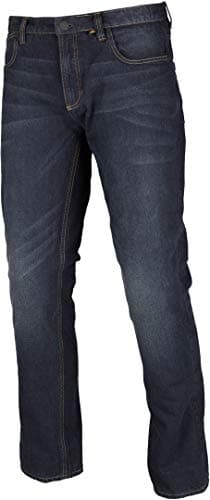
Count the gear on the next rider you pass. Helmet, near-certainly. Jacket with shoulder and elbow armor, usually. Gloves, often. Boots, sometimes. And then, from the waist down, ordinary jeans — a garment that abrades through in roughly the time it takes to read this sentence and leaves the hips, thighs and knees with nothing between them and the road. Riding pants are the single largest hole in the average street rider's kit, and the reason is not ignorance. It is that textile over-trousers are a nuisance to put on and take off at both ends of a commute, so they stay in the garage.
Armored riding jeans exist to close that hole by being wearable enough that you stop thinking about it. They look like denim, they walk into a coffee shop like denim, and underneath they are a certified abrasion garment with CE impact protectors at the knees and usually the hips. The best of them are certified to the same European standard as an armored jacket. The worst of them are ordinary jeans with pads in the pockets and the word "armored" in the listing title.
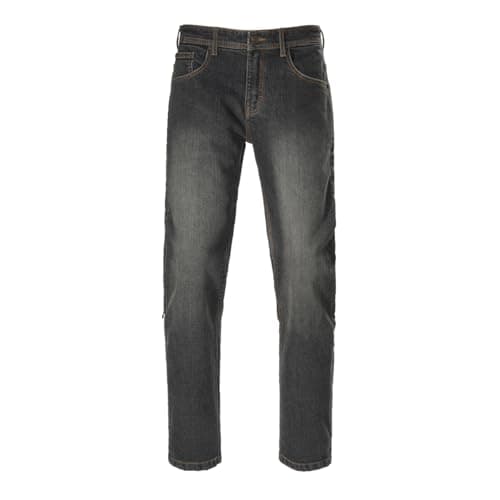
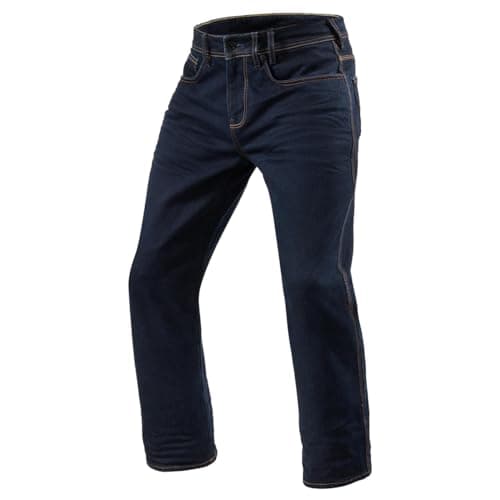
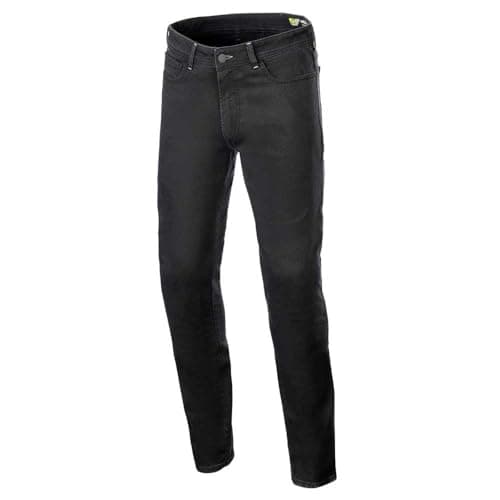
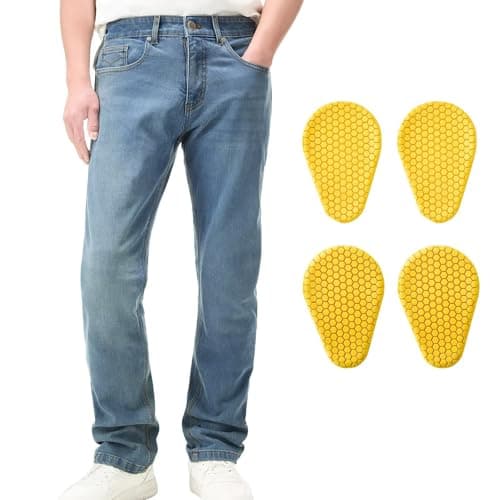
Telling those two apart is the whole job of this page, and there is a specific number that does it: the EN 17092 garment class. We ranked these on the class each maker publishes, then on which protectors are actually in the box, then on how the abrasion resistance is built. The KLIM K Fifty 2 takes the top spot for pairing a published CE AA rating with Kevlar-lined impact zones and knee, hip and tailbone protection included. The ScorpionEXO Covert CE Pro II matches the class for less. The REV'IT! Philly 3 LF is the AA-class jean built for heat. The Alpinestars Copper V3 publishes A Class and leaves the hip armor out. And the ILM PJN1 is the budget option that publishes no garment class at all — and says so on its own card.
One thing we do not do, here or anywhere on this site: we did not crash-test any of these, and neither did anyone else who will sell you a pair. Every certification, fabric weight and armor level below is taken from the maker's or the retailer's published spec sheet, and the sources are listed at the bottom of the page. Where a maker publishes nothing, we say that instead of guessing.
Jeans are the legwear you can walk into an office in. If that is not a constraint for you, textile over-pants publish higher garment classes and more often include hip armor — our motorcycle riding pants ranking covers that end of the category on the same EN 17092 terms.
Armored denim is not waterproof and does not pretend to be. If your riding includes real rain, the cheap fix is a shell over the top — our rain pants ranking covers the overpants built for exactly that.
EN 17092: the number that separates riding jeans from jeans
EN 17092 is the European standard for motorcycle protective garments, and it applies to trousers exactly as it applies to jackets. It sorts a garment into a class by testing the fabric itself — abrasion, tear, seam strength and impact-abrasion — across zones weighted by how likely each part of you is to hit the road. The classes that matter for denim are, in descending order of abrasion performance:
AAA (EN 17092-2) is the leather-suit tier and essentially never appears on jeans. AA (EN 17092-3) is the top of the realistic denim ladder and the class three of the five picks here publish. A (EN 17092-4) is a genuine certified garment one rung down, aimed at lower-speed urban riding — the Alpinestars sits here. Below that sit Class B (abrasion tested but with no impact-protector zones) and Class C (an armor carrier only), neither of which belongs in a page about jeans you would ride in.
The reason this matters more than any marketing phrase on the label: a class is a test result for the garment. "Aramid reinforced", "abrasion-resistant denim" and "reinforced in key areas" are descriptions of construction, and they can be perfectly true while telling you nothing about how long the trouser lasts on tarmac. If a maker has paid for certification, the class is on the product page, because it is the most expensive claim they own. If it is not there, assume it was not tested.
Garment class and armor level are two different certifications
This is the confusion the whole category runs on, and it is worth being precise. A pair of jeans carries up to two independent certifications. EN 17092 rates the garment — the denim, the seams, the construction. EN 1621-1 rates the armor at Level 1 or Level 2, and it rates only the protector, not the trouser holding it. Our CE armor levels guide walks the EN 1621 family in full.
You need both, and they fail in opposite directions. Certified armor in an uncertified trouser — the ILM's position — protects your kneecap from the impact and leaves the denim to do an abrasion job nobody has measured. A certified garment with no armor in the pockets protects you from the slide and not from the hit. A jean that is AA-classed and ships with CE protectors at the knee and hip, which is what the Klim, the Scorpion and the REV'IT! do, is the only configuration that closes both.
Check what is actually in the box
Armor supplied is the most reliable place for a spec sheet to quietly disappoint you. The Alpinestars Copper V3 is a fully certified A-class garment with Nucleon Flex Plus knee armor included — and hip pockets that arrive empty, with the hip protectors sold separately. That is disclosed, it is common across the category, and it means the price on the tag is not the price of the protection.
Three questions answer it before you buy. Are knee protectors included, and at what level? Are hip protectors included, or just the pockets? Is there anything over the tailbone — the Klim is the only pick here with a pad there. If your jeans arrive with empty pockets, certified inserts are the cheapest fix on this site: see our knee armor ranking for pads that drop straight into a pant pocket.
Single layer or lined: the comfort decision that is really a heat decision
There are two ways to build an abrasion-resistant jean. The traditional way is a lined construction: normal-feeling denim outside, aramid — Kevlar or equivalent — sewn inside the slide zones. The Klim's 100% Kevlar panels and the Alpinestars' and ILM's aramid reinforcements all work this way. It is proven, and it is hot, because you are wearing two layers over the parts of your leg that already do not breathe.
The newer way is single-layer: one heavier fabric that is itself abrasion resistant, so there is no liner at all. The REV'IT! Philly 3 uses a 15 oz Cordura denim this way; the Scorpion's high-stretch nyco weave is the same idea in a stretchier fabric. Single-layer jeans are dramatically cooler and lighter, and the good ones certify to the same AA class as the lined ones. If summer heat is why your riding jeans live in a drawer, this is the construction to look for — the same logic our summer riding gear guide applies to the rest of the kit.
Fit is a protection spec, not a vanity spec
Armor only works where it is. A knee protector that sits two inches above your kneecap when you are seated on the bike is protecting your thigh, and the same jean can be perfect on one rider and useless on another purely because of inseam. This is why adjustable knee pockets are worth paying for: the Scorpion's pocket is height-adjustable, the Alpinestars gives three positions, the REV'IT! protector fits at two heights, and the Klim's knee pad pocket adjusts. Buy the pair whose adjustment range covers your leg.
Two practical notes. Try the seated position, not the standing one — denim rides up when you swing a leg over, and the armor moves with it. And if a maker offers multiple inseam lengths, take that seriously; the budget ILM does, and it is the single most useful thing about it, because a $100 jean whose armor lands on your kneecap outperforms a $300 jean whose armor lands above it.
What a riding jean is not
It is not over-trousers. A dedicated textile riding pant with a membrane and Level 2 armor out-protects every jean on this page, and if your riding is long distance, wet or fast, that is the honest recommendation — the same way we would not send a touring rider out in a mesh jacket. Riding jeans win on a narrower argument: they are the protective legwear that gets worn on the short commute, the errand and the coffee run, which is precisely where people ride in cotton and get hurt.
They are also not a substitute for the rest of the kit. Legwear sits below a helmet, gloves, an armored jacket, boots and a back protector in the buying order — our gear checklist lays out the whole sequence. Jeans are the step most riders never take, not the step they should take first.
Which pair should you buy?
Buy the KLIM K Fifty 2 if you want the most complete published package on this page — CE AA to EN 17092-3, Kevlar-lined impact zones, and D3O EVO knee and hip armor plus a tailbone pad in the box — and you accept a warm, premium-priced trouser to get it. Buy the ScorpionEXO Covert CE Pro II if you want that same AA class with knee and hip armor included for meaningfully less, in the stretchiest denim here. Buy the REV'IT! Philly 3 LF if heat is the reason you do not currently wear riding jeans: AA class in a single 15 oz layer, cut loose. Buy the Alpinestars Copper V3 if fit and adjustability matter more to you than the top class, and budget for the hip armor it does not include. And buy the ILM PJN1 only with your eyes open — it has certified armor, aramid in the slide zones and a price that gets denim off your legs today, but no maker anywhere publishes a garment class for it, and that absence is the whole reason it sits last.
The class ladder those three publish — and the reason a missing class is ambiguous rather than damning in the US market — is laid out in our EN 17092 explainer.