Here's the honest version most "women's helmet" lists won't give you: a helmet doesn't know your gender. What decides whether a lid fits and protects you is your head shape and your head circumference— and because many women have smaller and rounder-to-intermediate heads, the helmets that fit best are the ones that come in genuinely small shell sizes and don't force a long-oval shape. We didn't crash-test these; we compiled the certifications, shell and size specs, and fit reputations, then ranked them on exactly that.
Our pick for most riders is the HJC i10: DOT and Snell M2020 certified, a forgiving rounder-to-intermediate fit, a Pinlock-ready shield in the box, and a wide size run that reaches genuinely small. Want a premium, feather-light shell? The ECE 22.06 AGV K6 S comes in four shell sizes so a small head gets a small shell, not a padded-out large one. The Shoei RF-1400 is the refined all-rounder for an intermediate-oval head, and the Bell Qualifier is a budget lid that genuinely suits rounder heads. Every pick clears DOT at a minimum.
The single most important step is measuring correctly and learning your shape — do that on our measuring guide and head-shape page before you commit to a brand. A certified helmet in the right size and shape out-protects a pricier one that fits poorly, every time. For the certification detail behind the picks, see DOT vs ECE vs Snell.
Why "women's" helmets are mostly a fit story
A handful of models are marketed to women, usually with different graphics and occasionally a slightly smaller cheek-pad set — but the shell and the certification are the same unisex engineering. That's good news: it means you are not limited to a small "women's" range, and you should shop the entire market for the shape and size that fit your head. What actually matters is a shell that runs small enough, a fit that isn't aggressively long-oval, and cheek pads you can swap to dial in the seal.
The short answer
| # | Product | Best for | Score | Price |
|---|
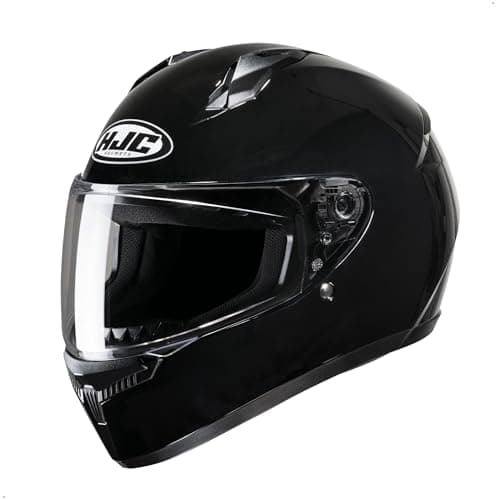
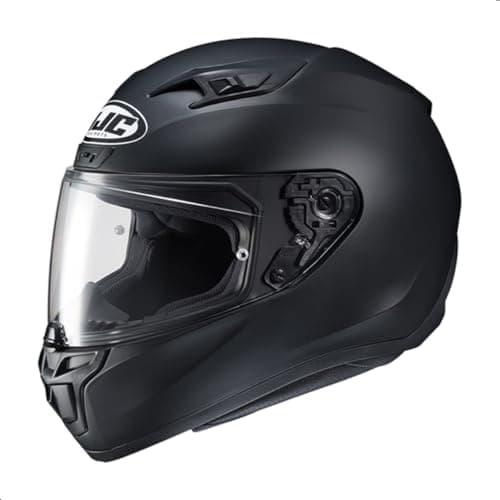
| 01 | HJC i10The value benchmark, and now the outgoing generation: HJC has replaced it with the i11, built on the same platform and certified to the newer Snell M2025D. The i10 itself is unchanged — DOT and Snell M2020 certified, a Pinlock-ready shield in the box, and a genuinely quiet, comfortable lid for roughly a fifth of a flagship's price. | Best value overall | | $135.99·Amazon |
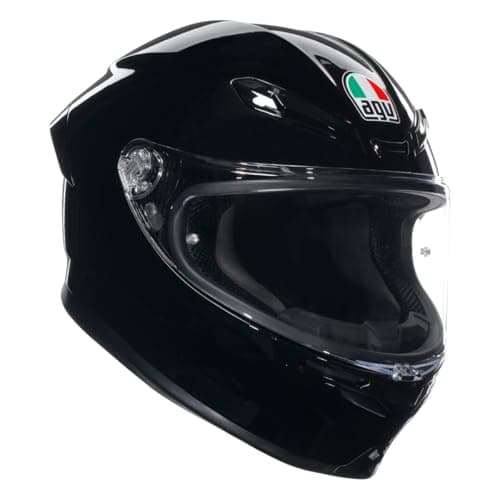
| 02 | AGV K6 SAstonishingly light for the money. A carbon-aramid-fiberglass shell and ECE 22.06 certification put it among the lightest full-faces you can buy, which your neck notices on a long day. | Lightest premium shell | | $639.00·Amazon |
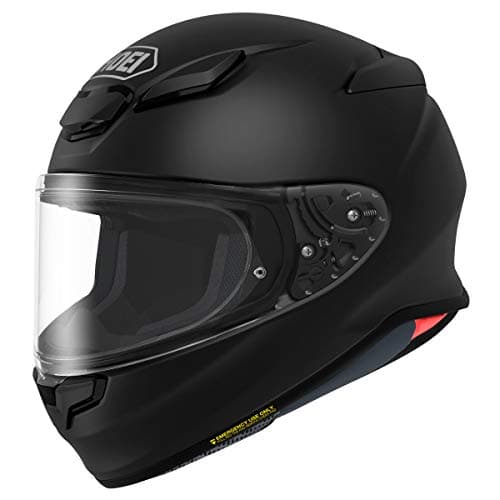
| 03 | Shoei RF-1400The reference full-face. DOT and Snell M2020 certified, a hand-laid fiberglass composite shell, and a fit-and-finish nobody at this price beats — if it suits your head shape, it is the safe default. | The all-round best | | $549.99·Amazon |
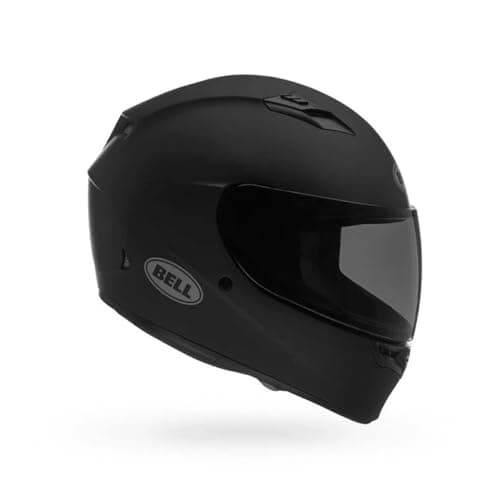
| 04 | Bell QualifierThe default budget full-face for good reason: DOT certified, a wide range of sizes and colors, and a click-release shield. It is heavy and a bit loud, but it protects and it fits round heads well. | Budget round-head fit | | $149.95·Amazon |
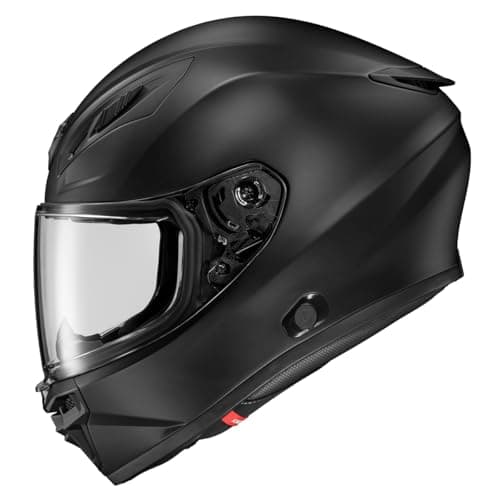
| 05 | Scorpion EXO-R430A lot of sport helmet for mid-money. DOT and ECE certified with an aero-tuned shell, a drop-down sun visor and Pinlock-ready shield — it punches above its price for commuters and canyon riders. | Best mid-price sport lid | | $184.95·Amazon |
| 06 | HJC C10The safest way to spend the least. DOT and ECE certified, light for a budget lid, and simple in the best way — the helmet to buy a new rider who should not skimp on the one piece that matters most. | Cheapest we'd recommend | | $113.99·Amazon |
#ad · Live prices from the Amazon Product API, as of October 19, 2026. Where we have no verified live price we show none — we would rather leave a gap than print a number that has rotted.
In detail
Best value overall
DOT · Snell M2020Polycarbonate shellPinlock-readySizes XS–3XL
The value benchmark, and now the outgoing generation: HJC has replaced it with the i11, built on the same platform and certified to the newer Snell M2025D. The i10 itself is unchanged — DOT and Snell M2020 certified, a Pinlock-ready shield in the box, and a genuinely quiet, comfortable lid for roughly a fifth of a flagship's price.
- Certification
- 8.6
- Shell/weight
- 7.8
- Noise/aero
- 8
- Fit range
- 8.6
- Value
- 9.6
Pros
- +DOT and Snell M2020 certified at an entry price
- +Comes Pinlock-ready with the pin included, so no fogging for a small add-on
- +Comfortable rounder-to-intermediate fit that suits a lot of heads
Cons
- −Polycarbonate shell is heavier than composites
- −Not the quietest at highway speed
- −Replaced in HJC's lineup by the i11, which carries the newer Snell M2025D
Don't buy this if…
…you ride a lot of highway miles and want the lightest, quietest lid available — or you want HJC's current-generation sport helmet, which is now the i11.
Lightest premium shell
ECE 22.06Carbon-aramid shell~1,300 g class4 shell sizes
Astonishingly light for the money. A carbon-aramid-fiberglass shell and ECE 22.06 certification put it among the lightest full-faces you can buy, which your neck notices on a long day.
- Certification
- 9.2
- Shell/weight
- 9.6
- Noise/aero
- 8.8
- Fit range
- 8.4
- Value
- 8.8
Pros
- +ECE 22.06 — the most demanding volume standard, including rotational testing
- +Carbon/aramid/fiberglass shell makes it one of the lightest full-faces at any price
- +Wide eye-port and strong ventilation for a sport-touring lid
Cons
- −No Snell certification
- −Sportier fit and padding than a pure touring helmet
- −No longer AGV's newest sport-touring lid — AGV has since added the K7 to the K-series at similar money, and sells both
Don't buy this if…
…you specifically want a Snell sticker for track days — the K6 leans on ECE 22.06 instead — or you want AGV's newest K-series full-face, which is the K7.
The all-round best
DOT · Snell M2020AIM+ fiberglass shell~3.7 lb / 1,680 gPinlock included
The reference full-face. DOT and Snell M2020 certified, a hand-laid fiberglass composite shell, and a fit-and-finish nobody at this price beats — if it suits your head shape, it is the safe default.
- Certification
- 9.6
- Shell/weight
- 9.2
- Noise/aero
- 9
- Fit range
- 8.6
- Value
- 8
Pros
- +Both DOT and Snell M2020 certified — a genuinely rigorous pair
- +Multi-ply matrix fiberglass shell in five sizes, so small heads get a small shell
- +Emergency quick-release cheek pads and excellent aero/noise control
Cons
- −Premium price
- −Intermediate-oval fit does not suit round heads
Don't buy this if…
…you have a round head shape or a tight budget — a helmet that fits your head beats a prestige badge that does not.
Budget round-head fit
DOTPolycarbonate shellNutraFog II shieldRound-head friendly
The default budget full-face for good reason: DOT certified, a wide range of sizes and colors, and a click-release shield. It is heavy and a bit loud, but it protects and it fits round heads well.
- Certification
- 7.4
- Shell/weight
- 7
- Noise/aero
- 7.2
- Fit range
- 8.2
- Value
- 9.2
Pros
- +DOT certified at a rock-bottom price
- +Suits rounder head shapes that premium brands often ignore
- +Click-release shield and padded wind collar to cut noise
Cons
- −DOT only, no ECE or Snell
- −Heavy polycarbonate shell
- −Louder than composite lids
Don't buy this if…
…you want ECE 22.06 or Snell certification, or the lowest weight — this is a budget-first pick.
Best mid-price sport lid
DOT · ECETCT composite shellDrop-down sun visorPinlock-ready
A lot of sport helmet for mid-money. DOT and ECE certified with an aero-tuned shell, a drop-down sun visor and Pinlock-ready shield — it punches above its price for commuters and canyon riders.
- Certification
- 8.6
- Shell/weight
- 8
- Noise/aero
- 8.2
- Fit range
- 8.2
- Value
- 8.8
Pros
- +DOT and ECE certified in the middle of the price range
- +Built-in drop-down sun visor — a feature usually reserved for pricier lids
- +Aero shell with solid ventilation and a Pinlock-ready face shield
Cons
- −Not the lightest
- −Sportier padding runs firm out of the box
Don't buy this if…
…you want a plush touring feel — this leans sporty and firm.
Cheapest we'd recommend
DOT · ECEPolycarbonate shellPinlock-readyLightweight budget
The safest way to spend the least. DOT and ECE certified, light for a budget lid, and simple in the best way — the helmet to buy a new rider who should not skimp on the one piece that matters most.
- Certification
- 8.6
- Shell/weight
- 7.8
- Noise/aero
- 7.4
- Fit range
- 8.2
- Value
- 9.4
Pros
- +DOT and ECE certified at the very bottom of the price range
- +Lighter than most budget lids and Pinlock-ready
- +Easy, forgiving fit that works for first-time buyers
Cons
- −Basic ventilation
- −No sun visor
- −Fewer size/shell options
Don't buy this if…
…you want premium quiet, a sun visor or the lightest shell — this is a price pick.
Getting the fit right
Measure, then match the brand's chart.Wrap a soft tape around the widest part of your head, about an inch above the eyebrows, and compare to the specific model's size chart — they differ, so measure for each. A correct fit is snug all the way around with no pressure points; it should move your scalp when you rotate it rather than sliding, and the cheek pads should feel firm because they compress 15-20% after break-in. Our how a helmet should fit guide has the full checklist.
Buy the shape, not the sticker gender.If a brand runs long-oval and your head is round, the fit will hot-spot on your forehead no matter the size — switch brands rather than sizes. Many of the smaller shells here also have swappable cheek pads, so you can tighten a fit that's close but not perfect. Once your lid is sorted, our gear guide covers the rest of the kit in priority order.
Gloves are the exception. Unlike a helmet shell, glove sizing does change with the label: Alpinestars sizes its women's gloves on a separate chart, where a women's medium fits the same hand as a men's small. That is why we rank women's motorcycle gloves separately.
How we picked
Everyone in this category says they tested twenty helmets. We haven't tested any — and we say so. What we do instead: compile the published DOT, ECE 22.06 and Snell certifications, the manufacturer's fit, weight and shell specs, the CE armor levels, and reputable published reviews, then score each pick against a published rubric. The scores are judgments from documented research — not measurements we took, because we do not run a lab and we are not going to pretend we do. Every certification and spec claim traces to a source we name and link.
Questions
Do I need a women's-specific motorcycle helmet?+
No. Helmet protection is set by certification and fit, and the shell and safety engineering are the same regardless of how a model is marketed. Shop the whole market for the shape and size that fit your head — a well-fitting unisex helmet protects you as well as any lid labeled for women.
How do I measure my head for a helmet?+
Wrap a soft tape measure around the widest part of your head, roughly an inch above your eyebrows and ears, and take the largest reading. Match that number to the specific model's size chart. See our
measuring guide for the full method.
Which helmets come in the smallest sizes?+
Brands that build multiple shell sizes — like the AGV K6 and Shoei RF-1400 — give a small head a genuinely small shell rather than a large one padded out, which keeps weight down and fit true. The HJC i10 and Bell Qualifier also run to small sizes at a lower price. Always confirm against the current size chart before buying.
Receipts
We do not run a testing lab, and we do not pretend to. Our picks are built from published certifications, manufacturer spec sheets, the standards documents themselves, and reputable published reviews — named and linked above. Where we could not verify something, we say so on the page rather than quietly leaving it out. Read our full method.