Skip to content
LID & LEATHER

The lid · Helmets

The Best Adventure Motorcycle Helmets

Peak, goggles or shield, pavement or dirt — adventure helmets ask you to pick a compromise. Ranked on published certification, weight and how the peak behaves at speed.

By Stephen V.Updated How we research
#ad

We earn a commission when you buy through our Amazon links, at no extra cost to you. It never affects our rankings, and we say so when the cheaper gear is the better buy. How this works.

An adventure helmet is the only lid on the market that is asked to do three jobs at once: survive a highway slide like a road helmet, take goggles and breathe like a motocross helmet, and shade your eyes with a peak on a dirt trail. Nothing does all three perfectly, which is why the honest question is not "which ADV helmet is best" but "which compromise matches the riding you actually do." We didn't crash-test any of these — we compiled the certifications each one carries, the shell and weight specs the manufacturers publish, and reputable published reviews, then ranked them on that.

The Bell MX-9 Adventure MIPS takes the overall pick because it does the most for the money: DOT and ECE certification, a MIPS rotational-impact layer included rather than sold as an upgrade, and a removable peak over a real face shield, so one helmet covers pavement, trail and everything between. The ScorpionEXO EXO-AT960 is the pick if you want a chin bar that flips — and it is the only helmet here with P/J dual homologation to ECE 22.06, meaning it is certified with the chin bar open as well as closed. The Shoei Hornet X2 is the premium answer, carrying DOT and Snell M2020 on a composite shell. And the ILM WS902is the cheapest dual-sport lid we would put on a rider's head.

One thing to be clear about before you spend: a peak and a big eye port are the two features that define this category, and both of them cost you at speed. The peak catches wind and tugs on your neck; the eye port lets more noise in. That is the ADV tax. If your riding is 90% pavement, a road full-face is lighter, quieter and cheaper for the same certified floor — and there is no shame in buying one.

The short answer

Quick picks

#ProductBest forScorePrice
01
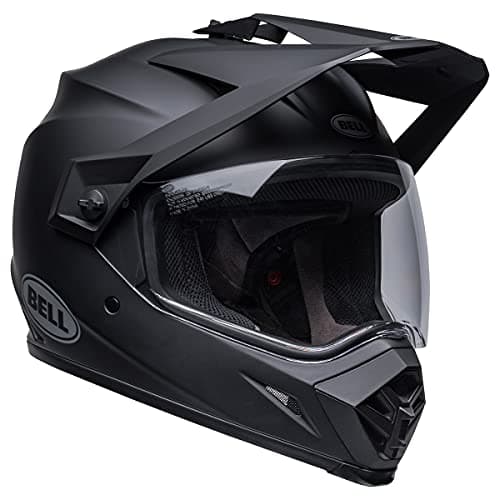
Bell Bell MX-9 Adventure MIPS
Bell MX-9 Adventure MIPS

The adventure helmet most riders should buy: DOT and ECE certified, MIPS rotational-impact liner as standard, a removable peak and a real face shield, at a price that leaves money for the rest of the kit.

Best adventure helmet overall
8.7
$249.95Amazon
02
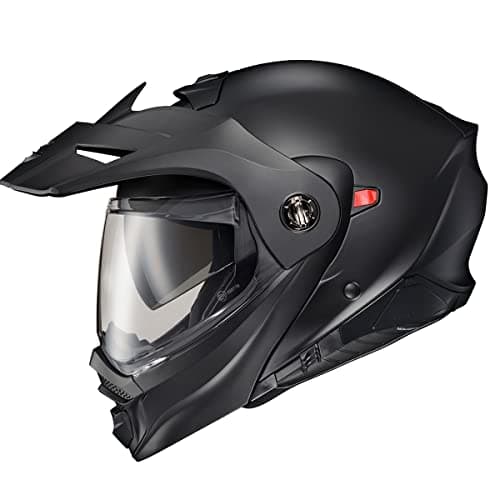
Scorpion ScorpionEXO EXO-AT960
ScorpionEXO EXO-AT960

The adventure lid that flips: P/J dual-homologated to ECE 22.06 so it is certified with the chin bar up as well as down, with a drop-down sun visor and a peak — the most useful helmet here for mixed pavement-and-dirt days.

Best modular adventure helmet
8.3
$314.95Amazon
03
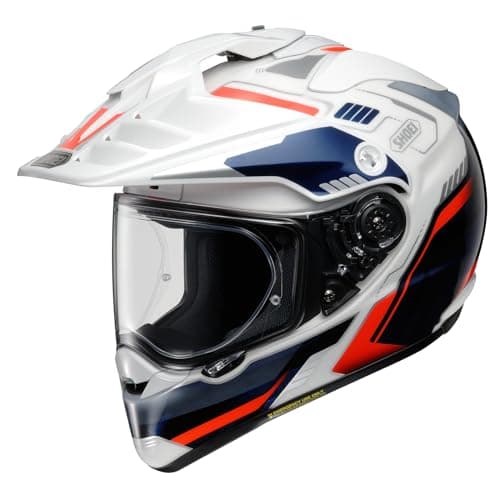
Shoei Shoei Hornet X2
Shoei Hornet X2

The premium adventure benchmark: an AIM+ multi-fiber composite shell carrying both DOT and Snell M2020, with an aerodynamically tuned peak that does not try to tear your head off at highway speed.

Premium pick
8.2
$819.99Amazon
04
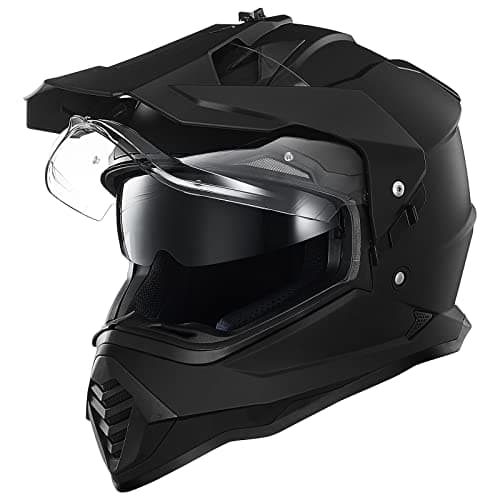
ILM ILM WS902 Dual Sport
ILM WS902 Dual Sport

The cheapest dual-sport lid we would actually recommend: FMVSS-218 compliant, with a drop-down sunshield, a Pinlock-30-compatible shield and a removable peak for well under a third of the mid-field price.

Cheapest we'd recommend
8.0
$109.99Amazon

#ad · Live prices from the Amazon Product API, as of Sep 4, 2026. Where we have no verified live price we show none — we would rather leave a gap than print a number that has rotted.

In detail

The picks, in full

01
Bell Bell MX-9 Adventure MIPS

Best adventure helmet overall

Bell MX-9 Adventure MIPS

DOT · ECE 22.06MIPS3 shell sizesRemovable peak
8.7/10

The adventure helmet most riders should buy: DOT and ECE certified, MIPS rotational-impact liner as standard, a removable peak and a real face shield, at a price that leaves money for the rest of the kit.

Certification
9
Weight
7.4
Versatility
9.2
Ventilation
8.8
Value
9

Pros

  • MIPS low-friction layer is standard, not an upcharge
  • Two-point removable peak plus an adjustable face shield — three configurations from one lid
  • Velocity-flow venting and NutraFog II anti-fog coating
  • Now listed to ECE 22.06, the current revision with its own oblique-impact test

Cons

  • Polycarbonate shell, so heavier than a composite ADV lid (Bell lists 3.74 lb)
  • No internal drop-down sun visor — you swap the shield or ride in sunglasses

Don't buy this if…

you want the lightest possible helmet for all-day highway miles — a composite shell saves real weight on your neck.

$249.95View on Amazon

Price as of Sep 4, 2026. Prices change — Amazon's is the one that counts.

#ad · we may earn a commission from this link to Bell MX-9 Adventure MIPS

02
Scorpion ScorpionEXO EXO-AT960

Best modular adventure helmet

ScorpionEXO EXO-AT960

DOT · ECE 22.06 (P/J)ModularDrop-down sun visor3 shell sizes
8.3/10

The adventure lid that flips: P/J dual-homologated to ECE 22.06 so it is certified with the chin bar up as well as down, with a drop-down sun visor and a peak — the most useful helmet here for mixed pavement-and-dirt days.

Certification
9.4
Weight
6.4
Versatility
9.4
Ventilation
8.4
Value
8

Pros

  • P/J dual homologation — certified open (Jet) as well as closed (Full)
  • Drop-down sun visor plus a removable peak and an oversized eye port
  • Designed around EXO-COM speaker pockets, so a comms unit fits without surgery

Cons

  • Heavy — Scorpion lists ±1,858 g in a medium
  • The peak and the flip-up hinge both add wind noise at highway speed

Don't buy this if…

you want the lightest lid on the list — the modular hardware costs you several hundred grams.

$314.95View on Amazon

Price as of Sep 4, 2026. Prices change — Amazon's is the one that counts.

#ad · we may earn a commission from this link to ScorpionEXO EXO-AT960

03
Shoei Shoei Hornet X2

Premium pick

Shoei Hornet X2

DOT · Snell M2020AIM+ composite shellDual-layer EPSAero peak
8.2/10

The premium adventure benchmark: an AIM+ multi-fiber composite shell carrying both DOT and Snell M2020, with an aerodynamically tuned peak that does not try to tear your head off at highway speed.

Certification
9.6
Weight
7
Versatility
8.8
Ventilation
9.2
Value
6.6

Pros

  • Snell M2020 as well as DOT — the toughest certification pair on this page
  • AIM+ fiberglass-and-organic-fiber shell with a dual-layer, multi-density EPS liner
  • The peak is wind-tunnel shaped, so head buffeting at speed is far better controlled than on a motocross-derived lid

Cons

  • Costs three times the mid-field picks
  • Shoei lists 3.99 lb in a medium — the peak and the big eye port add mass

Don't buy this if…

your ADV riding is mostly pavement — a road full-face is lighter, quieter and cheaper for the same certified floor.

$819.99View on Amazon

Price as of Sep 4, 2026. Prices change — Amazon's is the one that counts.

#ad · we may earn a commission from this link to Shoei Hornet X2

04
ILM ILM WS902 Dual Sport

Cheapest we'd recommend

ILM WS902 Dual Sport

DOT (FMVSS 218)ABS shellDrop-down sunshieldPinlock 30 ready
8.0/10

The cheapest dual-sport lid we would actually recommend: FMVSS-218 compliant, with a drop-down sunshield, a Pinlock-30-compatible shield and a removable peak for well under a third of the mid-field price.

Certification
7.4
Weight
6.8
Versatility
8.4
Ventilation
7.8
Value
9.4

Pros

  • Gets you a certified ADV-shaped helmet for roughly the price of a tank of premium
  • Internal drop-down sunshield plus a Pinlock-30-compatible outer shield
  • Seven-position vent system and a removable chin curtain

Cons

  • ABS shell in a single size — a small head gets a large shell
  • No Snell rating, and finish is a clear step below the mid-field lids

Don't buy this if…

you ride long highway days — the single shell size and basic aerodynamics show up as weight and noise.

$109.99View on Amazon

Price as of Sep 4, 2026. Prices change — Amazon's is the one that counts.

#ad · we may earn a commission from this link to ILM WS902 Dual Sport

How we ranked these

Certification first, as always. The Shoei Hornet X2 carries DOT plus Snell M2020; the Scorpion EXO-AT960 carries DOT plus ECE 22.06 — the current European standard — as does the Bell MX-9 Adventure MIPS, which is now listed to DOT plus ECE 22.06 after previously carrying the superseded 22.05; the ILM WS902 is FMVSS-218 compliant. Every one of those is a real, tested bar, and our DOT vs ECE vs Snell explainer walks through what each sticker actually tests. After certification we weighed published shell material and weight, how many shell sizes the maker offers, and what the peak and eye port do to noise and buffeting.

Peak, shield, goggles — pick your configuration

Every helmet here converts, and knowing the four configurations makes the choice obvious. Peak on, shield on is the ADV default: sun shading plus weather protection, at the cost of the most drag. Peak off, shield on turns the helmet into a heavy road full-face — the right setup for the highway slog to the trailhead. Peak on, shield off, goggles is the dirt setup: maximum airflow for when you are working hard at low speed, with goggles sealing out roost. Peak off, goggles is rare but exists for fast open-desert riding. A helmet that makes all four easy — tool-free peak, quick-release shield — is worth more in practice than one that scores half a point higher on paper.

The peak is an aerodynamic device, not a decoration

This is where adventure helmets separate. At trail speed a peak simply blocks the sun. At 70 mph it becomes a wing, and a badly shaped one lifts the helmet, tugs your head sideways when you turn to check a mirror, and roars. The Shoei Hornet X2 earns much of its price here: its peak is aerodynamically shaped and vented so air passes through rather than piling up in front of it. Motocross-derived peaks like the Bell MX-9 Adventure's are more prone to lift, which is exactly why Bell makes it removable in two points. If most of your miles are highway miles, buy the helmet with the calmer peak, or plan to take the peak off.

Weight is the spec riders underestimate

Adventure helmets are heavy. The big eye port, the peak and the extra venting all add shell, and the published numbers here run from Shoei's 3.99 lb to Scorpion's ±1,858 g in a medium — noticeably more than a road full-face. On a two-hour ride you will not care. On a ten-hour day, or standing on the pegs over rough ground, every hundred grams shows up in your neck. Composite shells (Shoei's AIM+, or a fiberglass composite) buy you weight savings that polycarbonate cannot; that is a large part of what the premium money is for.

Dual-sport, adventure, or motocross — they are not the same helmet

The names get used loosely, so here is the distinction that matters. A motocross helmet has a peak, a wide eye port and no shield at all — you must wear goggles, and it is designed for low-speed, high-effort riding where cooling beats aerodynamics. A dual-sport or adventure helmet adds a face shield and tames the peak so it can legally and comfortably do highway miles too. Everything on this page is the second kind. If you ride only dirt, a true motocross lid breathes better; if you ride only road, a full-face is better. The ADV helmet is for the rider who does both in one day. Our types of helmets guide lays out the whole family.

Which one should you buy?

Buy the Bell MX-9 Adventure MIPS if you want the most capability per dollar and a MIPS liner included. Buy the Scorpion EXO-AT960 if you value a chin bar that flips up at gas stops and want the newest certification on the page. Buy the Shoei Hornet X2 if you ride long, fast days and want the lightest, calmest peak with a Snell sticker behind it. Buy the ILM WS902 if the real choice is between a cheap certified dual-sport lid and no proper helmet at all — that is an easy call, and the money you save belongs in an armored jacket.

Whatever you pick, get the size right before you get clever about features. Measure your head with our helmet sizing guide and check the shape against our head-shape guide; a correctly fitted budget lid out-protects a premium one that rocks on your head.
How we picked

We don't test helmets. Here's what we do instead.

Everyone in this category says they tested twenty helmets. We haven't tested any — and we say so. What we do instead: compile the published DOT, ECE 22.06 and Snell certifications, the manufacturer's fit, weight and shell specs, the CE armor levels, and reputable published reviews, then score each pick against a published rubric. The scores are judgments from documented research — not measurements we took, because we do not run a lab and we are not going to pretend we do. Every certification and spec claim traces to a source we name and link.

Questions

Frequently asked

What is the difference between an adventure helmet and a motocross helmet?
A motocross helmet has a peak and a wide eye port but no face shield, so goggles are mandatory — it is built for low-speed, high-effort dirt riding where cooling matters most. An adventure or dual-sport helmet keeps the peak but adds a face shield and a more aerodynamic profile, so the same lid can also do highway miles. Everything on this page is the adventure type.
Can you take the peak off an adventure helmet?
On every helmet ranked here, yes. The Bell MX-9 Adventure uses a two-point removable peak, and the Scorpion and ILM peaks come off too. Removing the peak turns the helmet into a heavy road full-face, which is the right setup for a long highway transit — the peak is the single biggest source of drag and buffeting at speed.
Do adventure helmets work with goggles?
Yes — that is a core part of the design. The oversized eye port on an ADV helmet is sized to swallow a pair of goggles once the face shield is removed or flipped up. Goggles seal better against dust and roost than a shield does, so most riders run goggles off-road and the shield on pavement.
Are adventure helmets noisy?
Generally yes, more so than a road full-face. The peak disturbs airflow and the larger eye port and extra venting let more noise in. A wind-tunnel-shaped peak like the Shoei Hornet X2's controls it best; removing the peak helps on any of them. If quiet is your priority, compare against our quietest helmets ranking.
Is an adventure helmet worth it if I mostly ride pavement?
Usually not. If your riding is overwhelmingly road, a full-face gives you the same certified protection with less weight, less noise and a lower price. The ADV helmet earns its keep when a single ride includes both pavement and dirt, or when you genuinely want the goggles-and-peak option available.

Keep reading

Receipts

Sources

We do not run a testing lab, and we do not pretend to. Our picks are built from published certifications, manufacturer spec sheets, the standards documents themselves, and reputable published reviews — named and linked above. Where we could not verify something, we say so on the page rather than quietly leaving it out. Read our full method.