Skip to content
LID & LEATHER

The lid · Helmets

Bell vs Shoei

One brand builds a helmet for every kind of riding at a price most people can pay. The other builds fewer helmets, better. Here is how to choose between them.

By Stephen V.Updated How we research
#ad

We earn a commission when you buy through our Amazon links, at no extra cost to you. It never affects our rankings, and we say so when the cheaper gear is the better buy. How this works.

Bell and Shoei are not really competing for the same buyer, and pretending they are is how riders end up disappointed. Shoei makes a small number of composite-shell helmets to a very high standard and charges accordingly. Bellmakes a helmet for nearly every kind of riding — road, adventure, classic open-face, modular — at prices that start a long way below Shoei's floor. We didn't test either brand's helmets; we compiled the certifications they publish, the shell and weight specs from the manufacturers, and reputable published reviews, then compared them on what your money buys.

Certification: both clear the bar, Shoei clears more of them

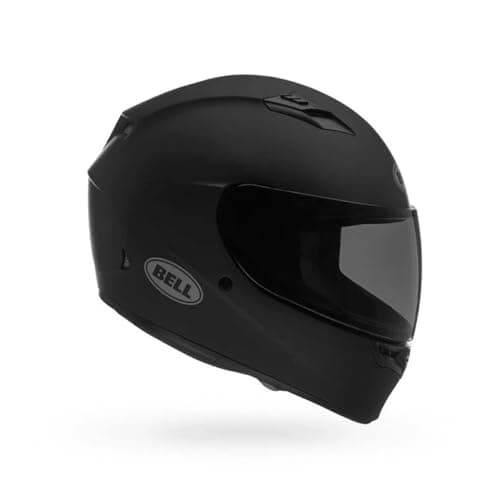
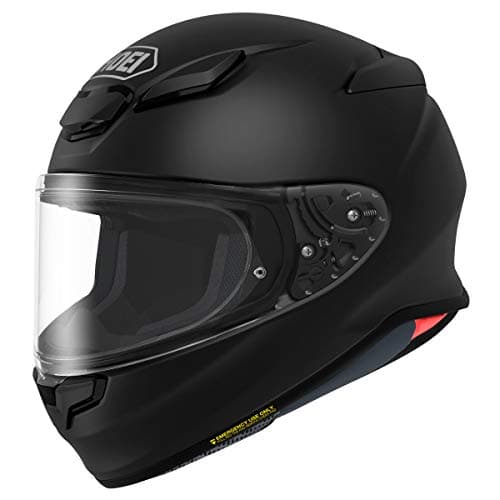
Start where it matters. The Shoei RF-1400 carries DOT and Snell M2020— the voluntary standard many track-day organizations require — and Shoei's adventure lid, the Hornet X2, carries the same pair. Bell's lineup is more mixed: the Bell Qualifier is DOT only, while the MX-9 Adventure MIPSadds ECE and a MIPS rotational-impact liner. So Shoei is consistently at the top of the certification ladder, and Bell ranges from "meets the US federal standard" to "DOT plus ECE plus MIPS" depending on which helmet you pick. Read the model, not the badge. Our DOT vs ECE vs Snell guide explains what each one actually tests.

Shell technology and weight

Shoei's road helmets use hand-laid multi-ply fiberglass and organic-fiber composites — AIM and AIM+ — in five shell sizes, so a small head gets a genuinely small shell rather than thicker padding. The payoff is lower weight on your neck and a lower profile. Bell spans the range: polycarbonate on the Qualifier and MX-9 Adventure, fiberglass composite on the SRT Modular and the Custom 500. Composite is stiffer for its weight, so it buys a thinner, lighter shell at the same certified performance. If you ride long days, this is the single spec most worth paying for — and it is where Shoei's premium is most defensible.

Fit: Shoei runs intermediate-oval, Bell is broader

Shoei's road helmets are built around an intermediate-ovalhead — the most common shape, but not everyone's. If your head is genuinely round, a Shoei will press at the forehead and crown no matter what size you buy. Bell's range is more forgiving: the Qualifier in particular is a well-known friend of rounder head shapes, and the Custom 500's five shell sizes suit the extremes of the size chart. Fit beats brand every single time — a correctly fitted Bell out-protects a Shoei that rocks on your head, and it is the one rule we would never bend.

Lineup breadth: this is Bell's real advantage

If you ride one bike on pavement, Shoei's narrow lineup is not a problem. If you own a cruiser and an adventure bike, Bell will sell you a classic open-face, an adventure lid with a peak, a mid-price modularand a budget full-face, all from one brand and mostly for less than one Shoei. Shoei covers most of the same ground — the J-Cruise II is its open-face and the Hornet X2 its adventure lid — but every one of them sits at the top of the price range, so matching Bell's spread costs several times as much. Breadth at a sane price is Bell's whole proposition.

What Shoei's premium actually buys

Not a higher grade of basic protection — both brands clear real certification bars. What you get is lower weight, a quieter and better-sealed cabin at highway speed, five shell sizes, tool-free shield changes, emergency-release cheek pads and a liner that survives many more wash cycles. Those are comfort and longevity gains, and they matter: a helmet you find comfortable is a helmet you keep wearing. But they are not a reason to buy a Shoei that doesn't fit, or to skip gloves and boots to afford one. We make the same argument at length in are expensive helmets safer.

The short answer

Quick picks

#ProductBest forScorePrice
01
Shoei Shoei RF-1400
Shoei RF-1400

The reference full-face. DOT and Snell M2020 certified, a hand-laid fiberglass composite shell, and a fit-and-finish nobody at this price beats — if it suits your head shape, it is the safe default.

The all-round best
9.1
$541.00Amazon
02
Bell Bell Qualifier
Bell Qualifier

The default budget full-face for good reason: DOT certified, a wide range of sizes and colors, and a click-release shield. It is heavy and a bit loud, but it protects and it fits round heads well.

Budget round-head fit
7.8
$149.95Amazon

#ad · Live prices from the Amazon Product API, as of Sep 4, 2026. Where we have no verified live price we show none — we would rather leave a gap than print a number that has rotted.

In detail

The picks, in full

01
Shoei Shoei RF-1400

The all-round best

Shoei RF-1400

DOT · Snell M2020AIM+ fiberglass shell~3.7 lb / 1,680 gPinlock included
9.1/10

The reference full-face. DOT and Snell M2020 certified, a hand-laid fiberglass composite shell, and a fit-and-finish nobody at this price beats — if it suits your head shape, it is the safe default.

Certification
9.6
Shell/weight
9.2
Noise/aero
9
Fit range
8.6
Value
8

Pros

  • Both DOT and Snell M2020 certified — a genuinely rigorous pair
  • Multi-ply matrix fiberglass shell in five sizes, so small heads get a small shell
  • Emergency quick-release cheek pads and excellent aero/noise control

Cons

  • Premium price
  • Intermediate-oval fit does not suit round heads

Don't buy this if…

you have a round head shape or a tight budget — a helmet that fits your head beats a prestige badge that does not.

$541.00View on Amazon

Price as of Sep 4, 2026. Prices change — Amazon's is the one that counts.

#ad · we may earn a commission from this link to Shoei RF-1400

02
Bell Bell Qualifier

Budget round-head fit

Bell Qualifier

DOTPolycarbonate shellNutraFog II shieldRound-head friendly
7.8/10

The default budget full-face for good reason: DOT certified, a wide range of sizes and colors, and a click-release shield. It is heavy and a bit loud, but it protects and it fits round heads well.

Certification
7.4
Shell/weight
7
Noise/aero
7.2
Fit range
8.2
Value
9.2

Pros

  • DOT certified at a rock-bottom price
  • Suits rounder head shapes that premium brands often ignore
  • Click-release shield and padded wind collar to cut noise

Cons

  • DOT only, no ECE or Snell
  • Heavy polycarbonate shell
  • Louder than composite lids

Don't buy this if…

you want ECE 22.06 or Snell certification, or the lowest weight — this is a budget-first pick.

$149.95View on Amazon

Price as of Sep 4, 2026. Prices change — Amazon's is the one that counts.

#ad · we may earn a commission from this link to Bell Qualifier

The verdict

Buy Shoei if you ride long road days, want the lowest weight and the quietest cabin, have an intermediate-oval head, or need a Snell sticker for track days. The RF-1400 is the helmet the rest of the road category is measured against, and it earns that.

Buy Bellif you want a certified helmet for a specific job — adventure, classic, modular, budget commuter — without spending Shoei money, if your head is rounder than intermediate-oval, or if you are at the small or large end of the size chart where Bell's multi-shell classics fit better. The MX-9 Adventure MIPS in particular gives you DOT, ECE and a MIPS liner for a fraction of Shoei's ADV price.

And if the honest answer is "I have a fixed budget and I need a full kit," buy the Bell and spend the difference on an armored jacket, gloves and boots. A complete set of certified gear protects you far more than one flagship helmet worn with a hoodie — which is the entire argument of ATGATT.
How we picked

We don't test helmets. Here's what we do instead.

Everyone in this category says they tested twenty helmets. We haven't tested any — and we say so. What we do instead: compile the published DOT, ECE 22.06 and Snell certifications, the manufacturer's fit, weight and shell specs, the CE armor levels, and reputable published reviews, then score each pick against a published rubric. The scores are judgments from documented research — not measurements we took, because we do not run a lab and we are not going to pretend we do. Every certification and spec claim traces to a source we name and link.

Questions

Frequently asked

Is Shoei safer than Bell?
Not categorically. Both brands sell helmets that pass real certification tests — Shoei consistently carries DOT plus Snell M2020 across its road lineup, while Bell ranges from DOT-only on the Qualifier to DOT plus ECE plus a MIPS liner on the MX-9 Adventure. Check the certifications on the specific model rather than assuming the badge tells you.
Which brand fits a round head better?
Bell, generally. Shoei's road helmets are built around an intermediate-oval head shape, so a genuinely round head gets pressure at the forehead and crown. The Bell Qualifier is a long-standing recommendation for rounder heads. Confirm your shape with our head-shape guide before you commit either way.
Does Shoei make an open-face helmet?
Yes — the J-Cruise II, on Shoei's AIM composite shell with an integrated sun shield, certified to DOT FMVSS 218. It is a premium product at a premium price. Bell's Custom 500 gives you five shell sizes and a fiberglass composite shell for a fraction of it; see how it ranks against the field in our best open-face helmets roundup.
Is a Bell helmet good enough for track days?
That depends on the organization, not on our opinion. Many track-day groups require a Snell-certified helmet, and Bell's Amazon lineup here is DOT and ECE rather than Snell. If Snell is on your paperwork, the Shoei RF-1400 clears it. Always check the specific requirements of the organization you are riding with.

Keep reading

Receipts

Sources

We do not run a testing lab, and we do not pretend to. Our picks are built from published certifications, manufacturer spec sheets, the standards documents themselves, and reputable published reviews — named and linked above. Where we could not verify something, we say so on the page rather than quietly leaving it out. Read our full method.