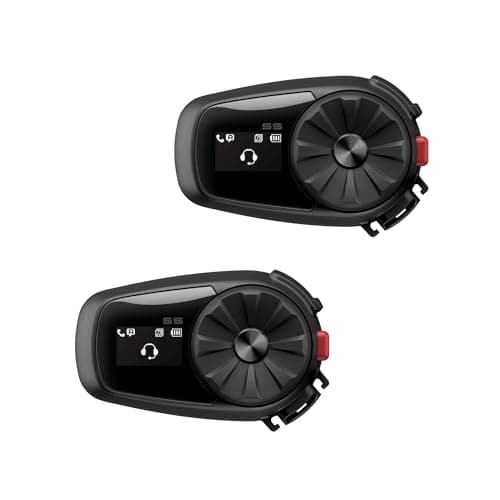
For a rider and one passenger, the Sena 5S Dual Packis the pick: Sena ships two complete units in one box, so there is no second purchase, no mismatched firmware and no pairing argument at the kerb. It is for the couple or the parent-and-kid pair who want to talk on every ride and do not ride in groups. The important thing about this page is what it leaves out — every intercom below is capped at two riders, and on a two-up bike that ceiling costs you absolutely nothing.
Two-up is the one situation where the expensive feature every comms review obsesses over — mesh networking, which keeps a group connected as riders drift in and out of range — is worthless. Your passenger is twenty inches behind your head. They are never out of range, never dropping out of the chain, and never rejoining the network. Mesh exists to solve a problem you do not have, which is why the right two-up intercom is usually one of the cheapest units a brand makes, and why we rank these on three things nobody puts on a spec sheet: whether the box contains two units, whether a passenger can work the controls in winter gloves without seeing them, and whether the mic and speakers fit the kind of helmet a passenger actually wears.
That last point catches more people than any other. Passengers are disproportionately likely to be in an open-face or half helmet — it is the helmet that gets bought for the person who rides occasionally — and a half helmet has no cheek pad to bury a speaker in and no chin bar to clip a boom mic to. If that is your pillion, the mic option decides the purchase before any other spec does, and our half-helmet intercom ranking goes deeper on that specific problem.
What a two-up setup actually needs
- Two units, ideally in one box. A "dual pack" or "duo" kit is usually cheaper than two singles and guarantees both headsets are the same model on the same firmware. Mixing a current unit with a hand-me-down from a friend is where most two-up frustration starts.
- Controls a passenger can find blind. A jog dial or a voice command beats a cluster of identical rubber buttons, because your passenger cannot see their own helmet and will not practise. Cardo's Natural Voice Operation and Sena's jog dial both exist for exactly this.
- A mic that suits the pillion's helmet. Wired mics tuck into a full-face cheek pad; boom mics are the answer in an open-face or half helmet. A unit that ships both gives you options.
- Intercom that stays open, hands-free. Two-up conversation is continuous, not push-to-talk. Every unit here holds an open intercom channel; what differs is how easily you can mute it when you want to think.
- Battery that covers your longest day, twice. Two headsets means two batteries to remember. Published talk time is the number to read, and on a two-up unit an open channel runs all day rather than in bursts.
We have not bench-measured range, battery life or microphone noise on any of these. What follows is built from the makers' published specifications — rider counts, working distance, talk time, mic options — plus reputable published reviews, scored against our published rubric. Where a maker publishes a number we use theirs; where nobody publishes one, we say so rather than inventing it.
The four units on the published numbers
Every figure here is the maker's own published specification, which is why the table has gaps: not one of these brands publishes a microphone noise figure, and only two publish a working distance for the two-rider case specifically.
| Unit | Rider ceiling | Published range | Two in the box? | Control method |
|---|
| Sena 5S Dual Pack | Bluetooth chain (no mesh) | Not published for the pair | Yes — two units | Jog dial |
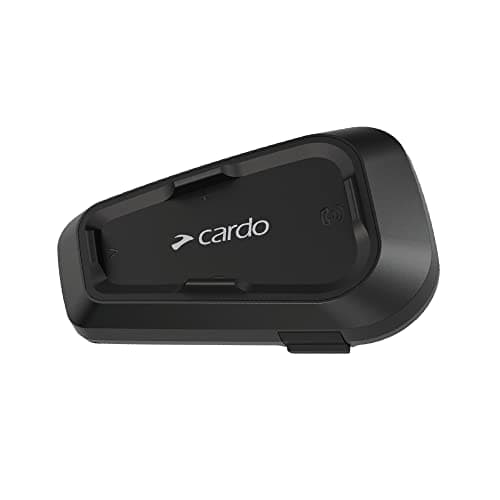
| Cardo Spirit HD | 2 riders, published as a hard limit | 600 m / 0.4 mi | Single or duo kit | Natural Voice Operation |
| Lexin G2P | Group intercom mode | Not published | Sold as a pair | Buttons |
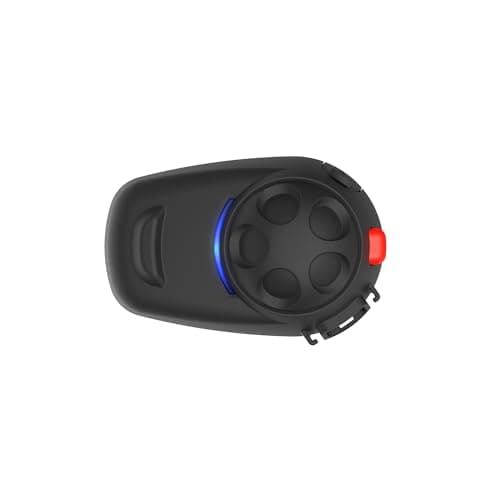
| Sena SMH5 | 2 riders | 400 m / 430 yds | Single or dual | Jog dial |
Why the two-rider ceiling is not a downgrade
Read the cons on any entry-level intercom and you will find the same line: connects up to two riders only. Cardo publishes it on the Spirit HD as a hard limit and we have written it on that unit's card ourselves, because for a rider shopping to join a group ride it genuinely is the reason not to buy. Two-up flips the sign on it. The ceiling is a limitation of the radio protocol, not of the sound, the microphone or the build, so paying to lift it buys you a capability that a pillion setup cannot use. The money is better spent on a second unit that matches the first.
The corollary matters too: if you ride two-up andin groups — a couple who tour with friends — this page is the wrong page. You want mesh, and you want it on both helmets, because the passenger's unit has to join the same network. Start at our mesh intercom ranking and our Bluetooth vs mesh explainer, which takes apart what mesh is actually doing and when the premium is worth it.
The pillion helmet problem
A full-face helmet is an easy install: lift the cheek pad, slot the speaker into the recess, run the wired mic to the chin bar. An open-face or half helmet has neither the recess nor the chin bar, and this is where a passenger's kit usually lands. The Sena SMH5is on this page specifically because Sena ships it with a choice of slim boom mic or wired mic in the smallest body it makes — the most adaptable option when you do not know what helmet your passenger will be wearing next summer. Its weaknesses are real and published: 7 hours of talk time and a 400 m / 430 yds working distance. Neither matters twenty inches apart on a Sunday ride; both matter if you also want to use it solo on a touring day.
If your passenger is in a half helmet permanently, read our half-helmet intercom guidebefore buying, and consider whether the helmet itself is the thing to upgrade — our open-face helmet ranking and half-helmet ranking cover what you give up and what you keep.
Voice control earns its keep on the back seat
A rider learns their own headset by feel in a week. A passenger rides four times a year, cannot see the unit, and will not practise. That asymmetry is the single best argument for the Cardo Spirit HD: Natural Voice Operation means the pillion says what they want instead of hunting for a button at 70 mph, and Cardo publishes 40 mm HD speakers and a six-preset FM radio at the bottom of its range. The published 600 m / 0.4 mi and the two-rider cap are the trade, and again — neither is a two-up problem.
Sena's answer is mechanical rather than spoken: the jog dial on the 5S and the SMH5 is one big wheel you can find and turn in a winter glove. Both approaches work. What does not work is a flat panel of four identical rubber buttons, which is the reason the Lexin G2P ranks where it does despite being the cheapest sensible way to get two helmets talking. Our budget intercom ranking has more at that end of the market, and how to install a helmet intercom covers getting a second unit into a second helmet without wrecking the liner.
One setup detail worth getting right
Pair the two units to each other beforeeither one is paired to a phone. Both Sena and Cardo pair intercom-to-intercom and phone-to-unit through different modes, and doing the phone first is the most common reason a new pair of headsets will take a call but not talk to each other. Then set the passenger's unit to auto-answer the intercom so they never have to do anything to be heard. If you are mixing brands — your Cardo and a borrowed Sena — it can be made to work over standard Bluetooth, and our Cardo and Sena pairing guide explains what you keep and what you lose.