Skip to content
LID & LEATHER

Spine + chest · Armor

Wearing a Back Protector Under Your Jacket

Yes, it goes under - never over. The real question is whether you need an insert for the pocket your jacket already has, or a harness protector that ignores the jacket entirely.

By Stephen V.Updated How we research
#ad

We earn a commission when you buy through our Amazon links, at no extra cost to you. It never affects our rankings, and we say so when the cheaper gear is the better buy. How this works.

Short answer: yes, a back protector is worn under your jacket, and for almost every road rider that is the only correct place for it. The longer answer is that there are two different productsthat both go under a jacket, they are not interchangeable, and which one you need is decided by something you can check in thirty seconds — whether your jacket has a back-protector pocket, and what is currently in it.

Here is the part that surprises people. Most textile and leather jackets sold with "CE armor" have certified protectors at the shoulders and elbows under EN 1621-1, and a slab of EVA or polyethylene foam in the back pocket that carries no EN 1621-2 levelat all. That foam is a comfort pad and a pocket spacer. It is not armor, the jacket's marketing does not usually claim it is, and the pocket exists precisely so you can buy the real thing separately. Reach around and feel the pad: if it is a uniform sheet of soft foam with no CE marking printed on it, you have an empty slot, not a protected back.

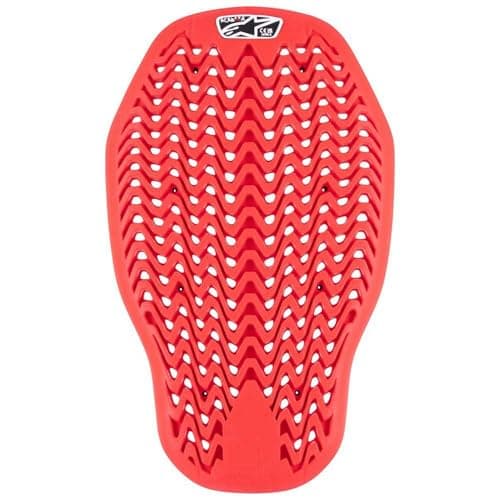
So the decision tree is short. Jacket has a back-protector pocket?Buy an insert sized to that pocket and slide it in — cheapest, slimmest, invisible. The Alpinestars Nucleon Plasma insert is the one we point most riders at because Alpinestars publishes it as a full-back protector certified to EN 1621-2:2014 CE Level 2, which is the higher of the two levels, in something that drops into a standard pocket. No pocket, or a pocket you do not trust? Buy a harness protector— a protector on its own shoulder-and-waist harness that you put on like a backpack before the jacket. It fits your body rather than your jacket, it moves to your next jacket, and it holds position when you tuck.

This page is about the layering question. For which protector to buy, our back protector ranking does the picks, and what size back protector do I need has the two measurements makers actually ask for. If you are still deciding whether to bother at all, do you need a back protector makes that case.

The short answer

Quick picks

#ProductBest forScorePrice
01
Alpinestars Alpinestars Nucleon Plasma Insert
Alpinestars Nucleon Plasma Insert

The easy upgrade, and it does not compromise on level: Alpinestars publishes this insert as a full-back protector certified to EN 1621-2:2014 CE Level 2, and it drops straight into the empty pocket most jackets ship with.

Best jacket-pocket insert
8.5
$79.95Amazon
02
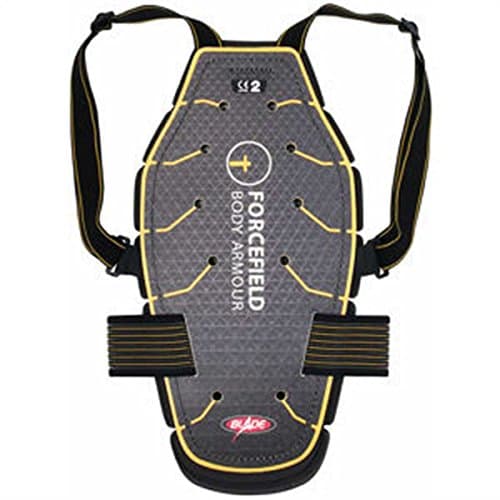
Forcefield Forcefield Blade Level 2
Forcefield Blade Level 2

A proper standalone back protector: CE Level 2 certified, worn on its own harness so it fits any jacket, and flexible enough to forget you have it on. The one to buy if your jacket only has a foam pad.

Best standalone back protector
8.9
$129.99Amazon
03
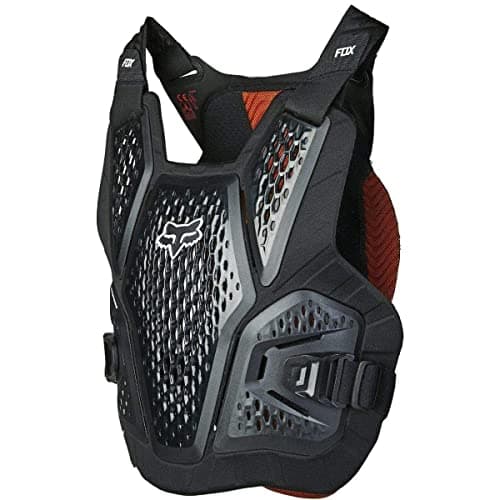
Fox Racing Fox Racing Raceframe (D3O)
Fox Racing Raceframe (D3O)

A soft D3O back protector aimed at off-road and adventure riders: the impact material stiffens on impact and stays flexible the rest of the time, with airflow channels for hot, hard riding.

Best for off-road / ADV
8.5
$229.95Amazon

#ad · Live prices from the Amazon Product API, as of November 19, 2026. Where we have no verified live price we show none — we would rather leave a gap than print a number that has rotted.

In detail

The picks, in full

01
Alpinestars Alpinestars Nucleon Plasma Insert

Best jacket-pocket insert

Alpinestars Nucleon Plasma Insert

EN 1621-2:2014 Level 2Slot-in insertFlexible foamVentilated
8.5/10

The easy upgrade, and it does not compromise on level: Alpinestars publishes this insert as a full-back protector certified to EN 1621-2:2014 CE Level 2, and it drops straight into the empty pocket most jackets ship with.

Protection
8.4
Fit/coverage
8
Comfort
8.8
Ventilation
8.4
Value
9.4

Pros

  • Drops into a standard jacket back-protector pocket in seconds
  • Alpinestars publishes CE Level 2 to EN 1621-2:2014 - the same level as our standalone pick, in a pocket insert
  • Flexible and vented, so it disappears once it's in

Cons

  • Only works if your jacket has the pocket
  • Sized by the jacket pocket rather than your body, and it relies on that pocket to hold position - a harness protector stays put better when you tuck

Don't buy this if…

…your jacket has no back-protector pocket — get a harness protector instead.

$79.95View on Amazon

Price as of November 19, 2026. Prices change — Amazon's is the one that counts.

#ad · we may earn a commission from this link to Alpinestars Nucleon Plasma Insert

02
Forcefield Forcefield Blade Level 2

Best standalone back protector

Forcefield Blade Level 2

EN 1621-2 Level 2Worn on a harnessFlexibleFull-back coverage
8.9/10

A proper standalone back protector: CE Level 2 certified, worn on its own harness so it fits any jacket, and flexible enough to forget you have it on. The one to buy if your jacket only has a foam pad.

Protection
9.4
Fit/coverage
9
Comfort
8.6
Ventilation
8.2
Value
8.4

Pros

  • CE Level 2 — absorbs more impact energy than the Level 1 baseline
  • Its own harness means it works with any jacket, or on its own
  • Flexible, ventilated construction you actually keep wearing

Cons

  • Costs more than an insert
  • A harness is one more thing to put on

Don't buy this if…

…your jacket already has a good back-protector pocket — a slot-in insert may be simpler and cheaper.

$129.99View on Amazon

Price as of November 19, 2026. Prices change — Amazon's is the one that counts.

#ad · we may earn a commission from this link to Forcefield Blade Level 2

03
Fox Racing Fox Racing Raceframe (D3O)

Best for off-road / ADV

Fox Racing Raceframe (D3O)

D3O impact foamCE certifiedVentilatedAdjustable straps
8.5/10

A soft D3O back protector aimed at off-road and adventure riders: the impact material stiffens on impact and stays flexible the rest of the time, with airflow channels for hot, hard riding.

Protection
8.8
Fit/coverage
8.6
Comfort
8.4
Ventilation
8.8
Value
7.8

Pros

  • D3O material stays soft to wear and firms up on impact
  • Ventilated for hot off-road riding
  • Adjustable harness fits over or under a jersey

Cons

  • Pricier than a plain insert
  • Off-road cut is bulkier under a street jacket

Don't buy this if…

…you just want a slim insert for a street jacket pocket — an insert is simpler.

$229.95View on Amazon

Price as of November 19, 2026. Prices change — Amazon's is the one that counts.

#ad · we may earn a commission from this link to Fox Racing Raceframe (D3O)

Why under the jacket, and never over it

A back protector only works if it is still on your spine when you stop sliding, and the mechanism that keeps it there is friction against your body plus straps around it. Strap one outside your jacket and you have changed the problem entirely: the jacket can now slide independently underneath the protector, the protector can ride up over the slippery textile, and the one layer meant to stay put is sitting on the one surface designed to be slippery.

There is a second reason, and it is the one riders feel rather than read about. Protectors worn outside a jacket catch air. At highway speed a flat panel on your back behaves like a small sail, the straps load your shoulders, and you will take it off within a week. Gear you stop wearing protects nothing.

The exception is off-road, where a protector or roost deflector over a jersey is completely normal — there is no abrasion layer to slide against, speeds are lower, and heat management wins. That is the case the Fox Raceframe is built for: a D3O harness that works over or under a jersey. On the road, under the jacket.

Insert or harness: the honest trade-off

Both routes can get you to CE Level 2. They differ in what sets the fit.

An insertis sized and held by the jacket pocket. That is its whole appeal — nothing extra to put on, no straps, no bulk, and you forget it is there. It is also its limitation: the pocket decides where the protector sits, and pockets are cut for an average torso. If the jacket rides up when you lean forward, the protector rides up with it. And a pocket is usually sized for one protector size, so a tall rider cannot simply buy a longer one.

A harness protector — the Forcefield Blade Level 2 is the archetype — is sized and held by you. It goes over your base layer, the shoulder straps and waist belt lock it to your spine, and it stays there whatever the jacket does. It works with a jacket that has no pocket, with a jacket whose pocket is the wrong size, with a mesh summer jacket, and on its own over a jersey. The cost is one more garment in the routine and slightly more bulk under a close-fitting jacket.

Our rule of thumb: if your jacket has a pocket and you ride a street bike in a normal riding position, the insert is the better buy because you will actually use it. If you own more than one jacket, ride tucked, or have a torso length outside the middle of the range, buy the harness.

Will it actually fit under the jacket you own?

Three things decide this, and all three are checkable before you buy.

  • Pocket dimensions, for an insert.Turn the jacket inside out, find the pocket behind the lining and measure its inside height and width. Then compare with the protector's published dimensions rather than its size letter — "L" means different things to different makers. If it is within a centimeter, it will go in; if it needs forcing, the foam is being compressed and that is not free.
  • Room over your layers, for a harness. Put the harness on over what you actually ride in, then zip the jacket. It should close without the zipper straining and without the shoulder armor being pushed outboard off your shoulder points. Armor that has been displaced is decoration.
  • Length in the riding position. Lean forward as if on the bars. The protector should still reach from the base of your neck down past the bottom of your rib cage, not have slid up to sit between your shoulder blades. This is the check that fails most often, and it is the reason a protector that fits standing up can still be the wrong one.

If the jacket will not close over a harness, size up the jacket next time rather than down the protector — see how a jacket should fit, which covers buying a shell with room for armor and layers. This is sharpest in winter, when the protector is competing with a thermal liner and a base layer for the same space; our winter jacket ranking notes which shells have room and which publish adjustable armor pockets.

What goes next to your skin

Something, and ideally something wicking. A hard protector shell against bare skin in July is unpleasant enough that riders leave it at home, and the foam traps sweat against you, which makes the protector smell and makes you colder when the temperature drops. A thin synthetic or merino base layer under the protector solves both. The stack, outside in, is: jacket, then protector, then base layer, then you. Our layering guide covers the whole order, including where a thermal liner goes relative to armor.

Back protector plus chest protector, and the airbag case

A full torso harness that carries both back and chest protection also goes under the jacket, and the same friction logic applies. Check compatibility before buying both pieces separately — they compete for the same space across your shoulders, and a protector that sits on top of a chest piece will not stay put. Our chest protector ranking covers that side of the stack, and best motorcycle body armor covers combined harnesses.

Airbag vests are the one real exception to "always under", and not for the same reason as off-road gear. Makers specify their own configuration: some vests are designed to be worn over the jacket, some under a jacket cut to allow for inflation, and a vest worn inside a jacket that cannot accommodate it may not inflate properly. Follow the maker's instruction rather than this page's general rule, and do not add a rigid back protector underneath an airbag unless the maker says to — see airbag vest vs back protector and best airbag vests.

The thirty-second audit

Do this tonight with the jacket you already own. Find the back pocket. Pull out whatever is in it. Look for a CE mark and the text EN 1621-2 with a Level 1 or Level 2designation printed or labeled on the pad itself. If it is there, you have certified armor and you are done. If the pad is blank foam, you have found an empty slot, and an insert is the cheapest meaningful upgrade available to you — a Level 2 protector may transmit no more than 9 kN average in the EN 1621-2 test against 18 kN for Level 1, and plain foam is not held to either figure. Level 1 vs Level 2 explains what those numbers are and are not.
How we picked

We don't test helmets. Here's what we do instead.

Everyone in this category says they tested twenty helmets. We haven't tested any — and we say so. What we do instead: compile the published DOT, ECE 22.06 and Snell certifications, the manufacturer's fit, weight and shell specs, the CE armor levels, and reputable published reviews, then score each pick against a published rubric. The scores are judgments from documented research — not measurements we took, because we do not run a lab and we are not going to pretend we do. Every certification and spec claim traces to a source we name and link.

Questions

Frequently asked

Can you wear a back protector under a motorcycle jacket?
Yes, and on the road that is where it belongs. Either as an insert in the jacket's own back pocket, or as a harness protector put on before the jacket. A protector worn outside the jacket can slide against the shell, rides up in a crash and catches air at speed.
Does my jacket already have a back protector?
Usually not a certified one. Many jackets advertised with CE armor have EN 1621-1 certified shoulder and elbow protectors and an uncertified EVA or polyethylene foam pad in the back pocket. Pull the pad out and look for a CE mark with EN 1621-2 and a level. Blank foam means the pocket is effectively empty.
Insert or strap-on back protector - which is better?
Neither is better in the abstract; they are held in place by different things. An insert is positioned by the jacket pocket and is the one you will actually wear every ride. A harness protector is positioned by your own shoulder straps and waist belt, so it holds station when you tuck, works in any jacket and works with no jacket pocket at all. Both can be CE Level 2 — see our back protector picks.
Will a back protector fit under my jacket?
For an insert, measure the inside of the jacket's back pocket and compare with the protector's published dimensions, not its size letter. For a harness, put it on over your usual layers and zip the jacket: it should close without strain and without pushing the shoulder armor off your shoulder points. Then lean forward and confirm the protector still covers down past your ribs.
Should an airbag vest go over or under the jacket?
Whatever the maker specifies — this is the one place not to follow a general rule. Some vests are designed to be worn over a jacket, others under a jacket with room to inflate. A vest constrained inside a jacket that cannot accommodate inflation may not work as intended. See airbag vest vs back protector.
Do I need a base layer under a back protector?
Not strictly, but wear one. A protector against bare skin is hot and uncomfortable enough that riders stop wearing it, and the foam holds sweat against you. A thin wicking layer under the protector fixes both for very little money — see how to layer under gear.

Keep reading

Receipts

Sources

We do not run a testing lab, and we do not pretend to. Our picks are built from published certifications, manufacturer spec sheets, the standards documents themselves, and reputable published reviews — named and linked above. Where we could not verify something, we say so on the page rather than quietly leaving it out. Read our full method.