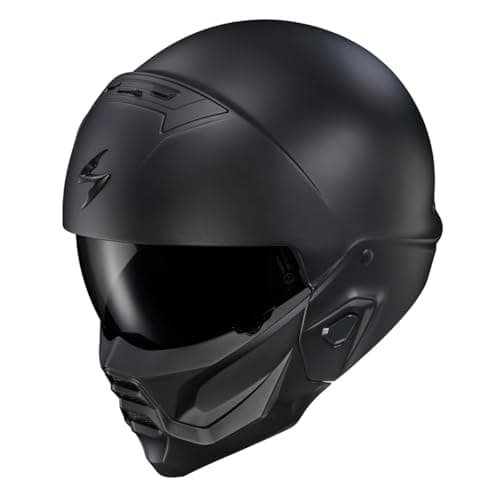
The best Bell Bullitt alternative you can buy today is the ScorpionEXO Covert 2 — a DOT FMVSS 218 three-quarter shell with a removable front mask and a drop-down sun visor, so it runs as a masked helmet or a clean 3/4 and solves the two things a Bullitt cannot do. It is the pick for the rider who wants the look without a bubble shield and sunglasses. On certification the strongest alternative is the Biltwell Gringo SV, which prints both DOT FMVSS 218 and ECE 22.06 — but we have no verified live price for it right now, which is why it sits second rather than first. The budget pick is the ILM Z503 Retro, the cheapest shell here by a wide margin. We have not tested any of these helmets; every certification, shell count and weight below is from a published spec sheet.
What the Bullitt is, and the one gap in its spec sheet
The Bell Bullitt is a low-profile fiber composite shell in three sizes at 3.24 lb, with a leather-trimmed micro-suede interior nothing else in the category matches. It is the helmet that made retro lids a real market again, and the finish is genuinely the best here.
The gap is specific and it is the reason this page ranks the way it does. Bell does not print an ECE revision number on the standard Bullitt — the Bullitt GT is the ECE 22.06 variant. “DOT and ECE” without a revision is a weaker claim than “DOT FMVSS 218 and ECE 22.06”, because 22.06 added rotational and oblique-impact testing that 22.05 never required. If you are shopping alternatives to save money, that is worth knowing: one helmet here prints the newer revision in full and costs less than the Bullitt.
How these alternatives were ranked
First, the certification revision, printed in full.Not “CE approved”, not “meets or exceeds” — the standard, the number and the revision. In this category that single test reorders the field dramatically, because retro helmets are sold on looks and several makers simply decline to publish what they passed. One pick here prints DOT FMVSS 218 and ECE 22.06. One prints DOT plus ECE 22.05. One prints DOT only. And one publishes gram weights and shell counts but will not say which standards it met, which is an odd combination we call out on its card.
Second, shell and EPS size counts. Retro shells are small and low-profile by design, which makes fit granularity more important rather than less. The Gringo SV publishes three shells and five EPS liners; the TORC publishes three shell and EPS sizes; others publish nothing.
Third, eye protection, because retro helmets make it your problem.A bubble shield, a flat shield, goggles or sunglasses — this is a real cost of the category, and two picks here handle it better than the Bullitt does: one with a drop-down internal sun visor, one with a CE-certified shield in the box.
Then weight, interior and value.Published grams beat adjectives. A medium-oval or round-friendly interior matters because retro shells are shallow and unforgiving of a shape mismatch — see head shapes.
What you give up leaving the Bullitt
Finish and interior.The leather-trimmed micro-suede interior is the Bullitt's real differentiator and nothing here matches it. Weight, in most cases: at 3.24 lb the Bullitt is light for a composite retro shell and only the TORC competes on published grams. And in two cases, a composite shell at all— the budget end of this page is polycarbonate and ABS, which means more mass on your neck.
What you do not give up is the certification floor.Every pick here carries DOT, which is the standard that governs road use in the United States, and two publish a named ECE revision as well. A cheaper retro helmet is not an uncertified helmet — the thing to check is whether the maker will print the number, which is exactly what this ranking tests.
Which alternative, for whom
Two helmets in one box: the ScorpionEXO Covert 2.For the rider who wants the retro silhouette but rides in real traffic and real sun. DOT FMVSS 218, polycarbonate, a removable front mask so it runs masked or as a clean 3/4, and a drop-down sun visor either way — which is the single most useful thing on this page and something the Bullitt does not offer. It publishes DOT only, and its card says so.
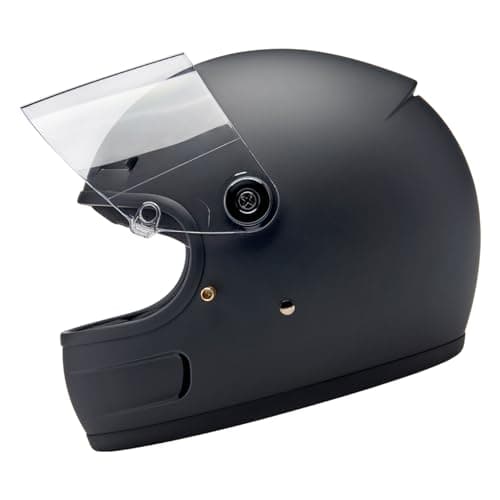
The certification answer: the Biltwell Gringo SV.For the rider who will not buy a helmet that hides its paperwork. It is the only retro lid we rank that prints both numbers — US DOT FMVSS No. 218 and ECE 22.06 — on three shells and five EPS liners, with a CE-certified shield included. You pay for that in weight at 3.69 lb, not in price. The honest caveat: we have no verified live price for it at the moment, so the buy button goes to Amazon's own number rather than one of ours.
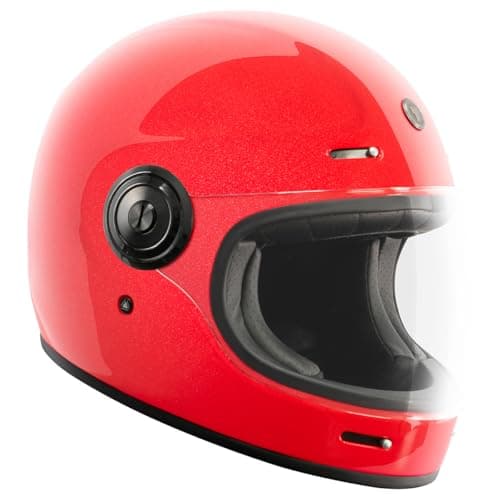
Composite shell, lowest price: the TORC T-1 Newport. For the rider who wants a real fiberglass shell and published gram weights for the least money. Three shell and EPS sizes and a medium-oval interior. The frustration, stated plainly: TORC publishes the weights and the shell counts and then will not print which standards the helmet passed, which is why it ranks third rather than first.
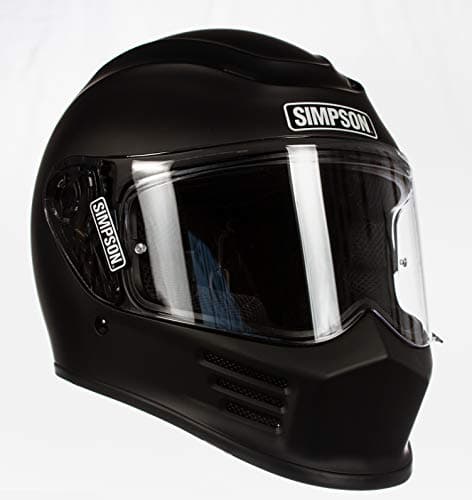
The widest view: the Simpson Speed Bandit.For the rider who wants the one shell nobody will mistake for anything else, and the biggest eye port in the category. DOT FMVSS 218 plus an ECE certification — but the ECE revision listed for it is 22.05, not 22.06, which is why it sits below the Biltwell.
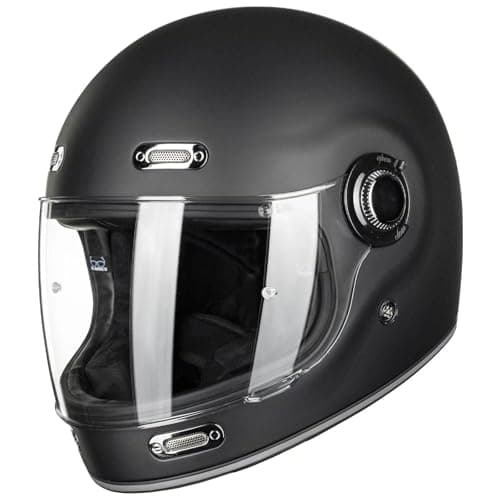
The cheapest retro shell we would list: the ILM Z503 Retro.For a second helmet, a town-only lid or a very tight budget. A metal-vented retro shell with a Pinlock-compatible visor for a fraction of what the others cost. Read ILM's own certification wording carefully before deciding it is enough — its card does not soften that. It is here because a certified helmet you own beats a Bullitt you are still saving for.
Two things to sort out before you order
Decide how you are covering your eyes.A retro helmet makes eye protection a separate purchase and a separate decision: a bubble shield looks right and distorts at speed, goggles seal and mark your face, sunglasses do nothing about wind or debris. Two picks here reduce the problem — the Covert 2 with a drop-down sun visor, the Gringo SV with a CE-certified shield in the box. Our goggle ranking covers the rest.
Then check the shape, because retro shells are shallow. There is less foam and less adjustment range in a low-profile retro helmet than in a touring full-face, so a shape mismatch shows up faster and hurts sooner. Measure with our measuring guide, then read head shapes before you commit. If the look matters less than the protection, the honest alternative to all of this is a full-face: our full-face ranking covers what the same money buys when you stop paying for a silhouette, and our open-face ranking is blunt about the chin bar you are doing without.